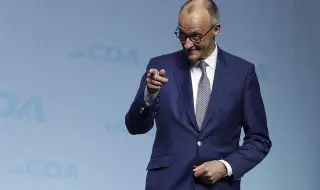
German Chancellor Friedrich Merz said today that Ukraine may be forced to accept the loss of part of its territory as part of a future peace agreement with Russia. According to him, such concessions could be part of the conditions for the country's further European integration, Reuters reports, quoted by BTA.
“At some point, Ukraine will have to sign a ceasefire agreement, and hopefully later a lasting peace agreement with Russia. Then it is possible that some of the territories will no longer be under Ukrainian control“, Merz told students at the “Carolus Magnus“ high school in the city of Marsberg, North Rhine-Westphalia.
He added that if Ukrainian President Volodymyr Zelensky decides to present such a perspective to the public and receives public support, including through a referendum, this would be his political decision.
“Then he must say to the Ukrainian people: I have opened the way to Europe for you“, the German chancellor said.
Ukraine is currently a candidate country for membership in the European Union. However, the accession process has been delayed due to the position of Hungarian Prime Minister Viktor Orban, although recent political changes in Budapest have raised expectations of a possible move to the next stage, Reuters recalls.
Merz, however, maintained reservations about Ukraine's rapid EU membership, stressing that the country cannot join while it is at war. He also said that Kiev must meet all the criteria related to the rule of law and the fight against corruption.
“Zelensky thought that Ukraine could join the EU on January 1, 2027. This is not possible, and even January 1, 2028 is not a realistic date“, the Chancellor noted.
As an alternative, he proposed intermediate forms of integration, including observer status in European institutions. He said that such an option was discussed at the summit in Cyprus last week and received broad support among European leaders, including in the presence of President Zelensky.