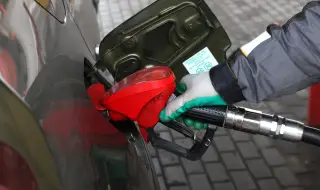
Fuel shortages continue to spread across Russia and are likely to worsen as high summer demand continues. This was noted by the Institute for the Study of War (ISW), News.bg.
The Russian opposition source "Important Stories" reported on June 6, citing local media, that there were long lines at gas stations in the Republic of Tatarstan and that only more expensive diesel was being sold there, as cheaper diesel was no longer available.
Russian opposition sources recently reported gasoline shortages in the Belgorod, Kursk, Leningrad, Saratov, Ryazan, Moscow, Tomsk, Murmansk, Voronezh, Oryol, Novgorod, Kamchatka, the Republic of Karelia, and the Krasnoyarsk Krai regions.
Any efforts by the Kremlin to preemptively prevent another gasoline shortage in 2026, similar to the one Russia faced in 2025, appear to have failed. The 2025 shortage, unlike the current one, occurred in late summer and early fall.
Russia is likely to struggle to deal with the shortage this year as effectively as it did last year, given the upcoming months of high summer demand.
The ongoing gasoline shortage in occupied Ukraine is leading to long lines at the Crimean Bridge and at gas stations in neighboring Russian territories.
Local television channels from Krasnodar Krai and Crimea reported on June 6 that drivers from occupied Crimea were traveling to gas stations in Temryuksky District, Krasnodar Krai, to buy gasoline amid the ongoing shortages and restrictions on sales in Crimea.
Local channels and the Russian opposition source "Astra" reported long lines to cross the Kerch Bridge from the Crimean side throughout the day on June 6.
The occupation governor of Sevastopol, Mikhail Razvozhaev, announced that the large Crimean TES and ATAN gas stations would sell only 20 liters of gasoline from June 6 to customers with pre-purchased coupons and that the free sale of gasoline would no longer be possible.
The increasing restrictions on the sale of gasoline in occupied Ukraine are likely to worsen existing shortages or cause new shortages in neighboring regions of Russia, as residents of occupied Ukraine seek alternative sources of gasoline.
Over the past month, Ukrainian forces have intensified their strikes with medium-range missiles and drones against major highways in Donbass, and over the past two months, against railway infrastructure in occupied Ukraine.
The head of the Luhansk People's Republic, Leonid Pasechnyk, was forced to issue a decree banning traffic on major highways in order to limit Ukrainian strikes.
The Ukrainian 3rd Army Corps announced on May 31 that it was now using drones to control the skies over the occupied cities of Luhansk, Starobilsk, Alchevsk, Bryanka and Kadiyevka, all of which are located on or near the Belgorod-Mariupol highway in the occupied Luhansk region. This allows for strikes on military convoys and supplies in the region.
Kremlin officials continue to reject any negotiated settlement that does not address their fabricated "root causes" of the war in Ukraine.
Russian Foreign Minister Sergei Lavrov said in a video message on the occasion of Russian Language Day on June 6 that restoring the rights of Russians and the Russian-speaking population in Ukraine is a "necessary condition" for a long-term peace settlement.
Lavrov's statement is in line with the Kremlin's repeated rhetoric about the alleged "root causes" of the war — a phrase the Kremlin uses to reiterate its maximalist demands.
Russian President Vladimir Putin publicly indicated on June 5 that he is not inclined to deviate from his original military goals and is ready to continue military action to achieve them.
The Kremlin's continued commitment to Putin's original military goals comes at a time when Moscow's battlefield performance is weakening and the Russian offensive is slowing.
Various sources continue to conclude that the effectiveness of the Russian military is declining, despite the use of various mapping methodologies to visualize the battlefield situation.
Ukrainian forces launched a second series of strikes against St. Petersburg at the close of the St. Petersburg International Economic Forum on June 6, thus proving once again that Russia is unable to reliably protect its major cities from Ukrainian strikes even during major international events.
Ukrainian strikes on St. Petersburg undermine Kremlin efforts to use the economic forum to project stability in Russia both domestically and internationally.