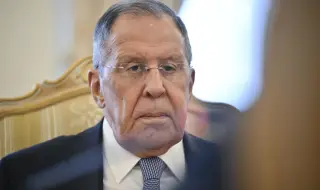
Russian Foreign Minister Sergei Lavrov will visit Minsk on June 14-15 and will be received by Belarusian President Alexander Lukashenko. This is stated in a statement by the Russian Foreign Ministry.
"On June 14-15, Russian Foreign Minister Sergei Lavrov will visit Minsk on a working visit. The program of the visit includes an audience with the President of the Republic of Belarus Alexander Lukashenko and negotiations with Foreign Minister Maxim Ryzhenkov in a narrow and expanded format, as well as laying a wreath at the Victory Monument on the occasion of the 85th anniversary of the start of the Great Patriotic War," the ministry noted.
"A wide range of current issues of bilateral cooperation and the international agenda will be discussed. Particular attention will be paid to the work on diplomatic support of integration processes within the Union State and increasing the international authority of this union," the Russian Foreign Ministry reported. “A schedule of key joint events and bilateral contacts will be outlined.“
The ministers will discuss practical aspects of interaction, including the preparation of a joint meeting of the collegiums of the foreign ministries of the two countries in the fourth quarter of 2026 in Belarus, at which, in particular, it is planned to sign a program of coordinated actions in the field of foreign policy of the states - parties to the Treaty on the Creation of the Union State for the next three-year period (2027-2029). A traditional “clock setting“ is expected on issues of foreign policy coordination within the framework of Eurasian integration associations and various international organizations, as well as “in building relations with third countries“.
“Progress in the implementation of joint initiatives will be considered, including countering sanctions and legal aggression of the “collective West“, as well as the formation of a new architecture of equal and indivisible security in Eurasia and the development of the Eurasian Charter for Diversity and Multipolarity in the 21st Century“, the ministry noted.