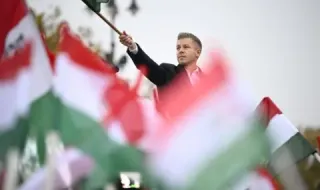
Hungary will continue to provide temporary protection to Ukrainian men of military age, despite new European Union restrictions, Prime Minister Péter Magyar said, BGNES reported.
According to him, Budapest will "take a different approach" and help people fleeing the war. He specified that Hungary will retain the right to provide protection to such men, many of whom he said are ethnic Hungarians from the Transcarpathian region.
"A few weeks ago, the European Union decided that refugee status cannot be granted to men of military age fleeing the war. "However, the government has decided to reserve Hungary's right to grant such status," the prime minister said.
About 100,000 ethnic Hungarians live in Transcarpathia, which borders Hungary. Magyar said he had raised the issue with European Council President Antonio Costa. According to the Hungarian prime minister, it is wrong to prevent people from leaving a country where there is war. "Hungary will take a different approach and provide assistance to those in need," he said.
In July, EU countries agreed to extend temporary protection for Ukrainians until March 4, 2028. The new rules, which came into force on August 5, do not allow Ukrainians who have not fulfilled their military obligations under Ukrainian law to submit new applications. The measure does not apply to citizens of other countries where there is military action. It was introduced at the request of Kiev due to a shortage of military personnel, and Hungary voted against it. It does not affect those already granted protection in the EU.
After the start of the full-scale Russian invasion in February 2022, Ukraine banned most men between the ages of 18 and 60 from leaving the country, and those over 25 were subject to mobilization. Some of the restrictions were eased last year.
Hungary previously also provided protection to men of military age under Magyar's predecessor, Viktor Orban. Since coming to power, Magyar has taken a different course, seeking closer relations with Kiev and Brussels, and taking a tougher stance on Russia. In July, he described Ukraine as a "victim" and Russia as a "brutal aggressor" at the NATO summit in Ankara.
In June, his government reached an agreement with Kiev on the rights of the Hungarian minority in Transcarpathia, which helped ease long-standing tensions between the two countries.