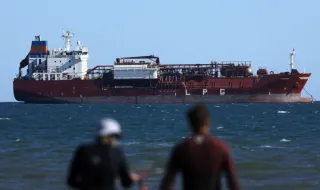
The administration of President Donald Trump is considering easing sanctions on tankers from the so-called shadow fleet linked to Russia, Iran and Venezuela. The aim is to increase the number of ships available to transport oil and refined products, and thus reduce record-high shipping costs that are putting pressure on diesel prices. This is reported by the Financial Times, citing sources familiar with the discussions.
The regime under discussion would not constitute a general lifting of sanctions on Russian or Iranian oil. A US official has described the possibility as allowing “legal oil“ – crude oil and petroleum products not banned by Washington can be transported on ships on sanctions lists. Companies will have to apply for a separate permit from the US Treasury Department.
Washington seeks more ships to transport from the Persian Gulf
According to discussions, the US wants to make it easier to export crude oil and fuels from the Persian Gulf region. This could increase the number of ships that serve short routes around the Strait of Hormuz - a strategic waterway between Iran and Oman, through which a significant part of the world's energy supplies pass.
Energy Secretary Chris Wright said in a video message to the World Petroleum Congress in Riyadh that the administration is considering easing restrictions on the shadowy fleet. According to data cited by Reuters, high tanker tariffs have already reduced demand for US oil in some markets.
The effect on prices may remain limited
Analysts at Energy Aspects estimate that the measure is unlikely to create significant new capacity for the global tanker fleet. Many of the sanctioned ships are old, their technical condition is unsatisfactory, and some of them have continued to operate in recent months despite the restrictions.
An additional obstacle is the rules of the European Union and the United Kingdom. Insurers who fall under their jurisdiction will have to comply with the current restrictions, even if the United States issues permits for the use of specific tankers. That could prevent a broader return of ships to normal trade.
Decision comes after Russian diesel rebate
The new discussion followed a temporary easing of sanctions on Russian diesel. The Trump administration’s authorization for deliveries is valid until April 7, 2027. It drew criticism from Ukraine, European countries and U.S. senators, who warned that the extra revenue could help Russia’s military economy.
The U.S. Department of Energy says any easing of sanctions on tankers would not help Russia transport its own oil or petroleum products. A final decision on the proposal has not yet been announced. However, high fuel prices are becoming a political risk for the White House ahead of the US midterm elections on November 3, 2026.
Sources: ft.com, gcaptain.com, apnews.com