The European Union is seeking an additional €70bn to help Ukraine sustain its military efforts in 2027. The shortfall has emerged as the Russian offensive continues and Brussels’ initial financial plans proved insufficient.
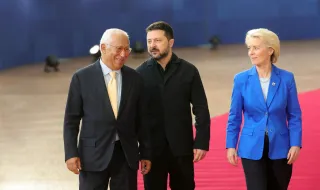
Ukrainian President Volodymyr Zelensky presented the amount of funding needed to EU leaders during their meeting last week.
„The war will cost €155bn next year. We need at least another €70bn from you – for defense, weapons and resilience“, Zelensky said.He said the funds would allow Ukraine to increase production of modern drones, slow down the Russian offensive, disrupt the Russian army's supply lines and reduce its ability to wage war.
The existing loan is no longer enough
Until now, EU support was based on a €90 billion loan approved in December. The plan was to cover two-thirds of Ukraine’s financial and military needs for 2026 and 2027, with the rest to be provided by other allies.
The estimate was made on the assumption that the war would end in 2026. Instead, Moscow has stepped up attacks, including daytime strikes targeting the already vulnerable Ukrainian economy.
Kiev estimates its additional needs at $32.6 billion for the budget and $45 billion for the armed forces next year. The total of $78 billion is roughly 70 billion euros. It would be on top of the €45 billion the EU plans to provide under the already approved loan, as well as funds under other programs.
The European Commission insists that the new financing must be a joint effort with Britain, Norway, Canada, Japan and other partners.
“We cannot do this alone. Our partners must step up their efforts,” a Commission spokesman said.New common debt or frozen Russian assets
The most likely option is for the EU to raise new common debt on financial markets and expand the existing credit facility. The union retains its AAA credit rating, but borrowing conditions have worsened. The yield on 10-year EU bonds rose from 2.8% in January to 3.44% in September.
The new borrowing could prove politically difficult as it would increase interest costs. Hungary, Slovakia and the Czech Republic have already been exempted from participating in the 90 billion euro loan. Other countries are also expected to not join the new mechanism. Among them could be Bulgaria due to Prime Minister Rumen Radev’s criticism of military aid to Ukraine.
The other option being discussed is the use of frozen Russian assets. They amount to about 210 billion euros in EU countries, with approximately 185 billion euros held in the Belgian depository Euroclear.
Belgian Prime Minister Bart De Wever warns that using the funds would be tantamount to confiscation and would create serious risks for his country. He is demanding general and unlimited guarantees against all possible financial consequences.
Volodymyr Zelensky said that Russia would try to get the assets back if Europe does not use them. However, the issue is not expected to be resolved soon.
„This issue will come up again and again. However, in the short term, I do not think it will be on the agenda,“ said the EU ambassador to Ukraine, Kateryna Maternova.Decisions on additional aid will be taken in parallel with negotiations on the next long-term EU budget and the upcoming presidential elections in France, where Marine Le Pen has said she will end aid to Ukraine.
Sources: euronews.com