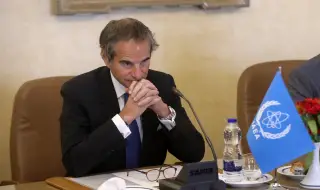
The helicopter crash that claimed the life of Iranian President Ebrahim Raisi and Foreign Minister Hossein Amir Abdollahian temporarily suspended discussions aimed at strengthening cooperation between Tehran and the International Atomic Energy Agency (IAEA), said IAEA Director General Rafael Grossi, BTA reports.
Grossi expressed his respect for Iran's period of mourning and expressed hope for a resumption of talks soon, describing the suspension as a "temporary interruption".
The IAEA, which is seeking to more closely monitor Iran's nuclear program, faces several obstacles. Among them are the recent expulsion of key uranium enrichment experts and Iran's continued failure to clarify the presence of uranium at undisclosed sites. Despite years of oversight by the IAEA, these issues remain unresolved. Iran's nuclear ambitions are a point of contention, with the country enriching uranium to 60% purity, a level alarmingly close to the 90% required for nuclear weapons. This development is unprecedented among nations that do not pursue nuclear weapons. However, Tehran insists that its intentions are peaceful.
With approximately 140 kilograms of uranium enriched to 60 percent purity, Iran possesses enough material that could theoretically be further enriched to produce three nuclear bombs, according to Grossi. This figure is up from the 121.5 kg reported in the IAEA's latest quarterly report, which was previously estimated to be enough for two bombs. The call for Iran to disclose its nuclear activities has grown louder, with Grossi highlighting declining global confidence in Iran's nuclear safeguards. As the world watches, the balance between diplomacy and security remains as delicate as ever, highlighted by recent tragedy and the pressing need for transparent dialogue.