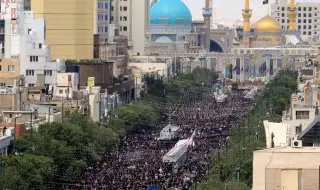
The United States has decided not to attend a UN ceremony intended to honor the late Iranian President Ebrahim Raisi. The US cited Raisi's involvement in "numerous, appalling human rights abuses" as the reason for his absence. The decision underscores the US position that the international community must support the Iranian people in their quest for freedom and justice.
Ebrahim Raisi, a figure often seen as a potential successor to Supreme Leader Ayatollah Ali Khamenei, tragically died in a helicopter crash in bad weather near the border with Azerbaijan on May 19. His tenure was marred by significant human rights problems, including the extrajudicial killings of thousands of political prisoners in 1988, a dark chapter in Iran's history that has drawn widespread condemnation.
The 193-member UN General Assembly traditionally honors world leaders who were in office at the time of their death. Various countries and regional groups delivered speeches during the 50-minute ceremony for Raisi. But the absence of the United States was a poignant reminder of the international divide over Raisi's legacy. Nate Evans, a spokesman for the US mission to the UN, stressed that Raisi's record of human rights abuses made it impossible for the United States to participate in the tribute. This position underscores ongoing concerns about human rights practices under Raisi.
Despite the controversy, UN Secretary-General Antonio Guterres and Iran’s permanent envoy to the UN, Amir Seyed Iravani, expressed their condolences and highlighted Raisi’s role at a time of challenges for Iran and the wider region. Guterres reaffirmed the UN’s solidarity with the Iranian people, underscoring their aspirations for peace, development and fundamental freedoms. Iravani praised Raisi and the late Iranian Foreign Minister Hossein Amir Abdollahian for their contributions to governance and diplomacy, reaffirming Iran’s commitment to peace, security, justice and multilateralism.
As Iran prepares for presidential elections on June 28 to choose Raisi’s successor, the international community remains divided over his legacy. The US boycott of the UN tribute serves as a stark reminder of ongoing human rights concerns and the complex dynamics of international relations.