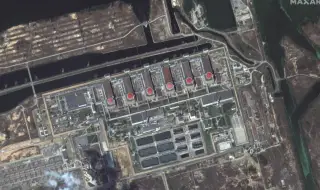
The UN General Assembly adopted a Ukrainian draft resolution requesting Russia to “immediately withdraw its troops and unauthorized personnel” from the territory of the Zaporizhzhia NPP and return it to Ukrainian control. "For" 99 out of 192 countries voted for the document, BTA reported.
"Against" 9 countries voted on the document (Belarus, Burundi, Cuba, North Korea, Eritrea, Mali, Russia, Nicaragua and Syria), and 60 countries, including China, Algeria, UAE, Mexico, Armenia, Tajikistan, Saudi Arabia and Vietnam, abstained.
Zaporozhka NPP, the largest in Europe, was seized by Russia soon after it launched its full-scale invasion of Ukraine in February 2022. It is closed but needs external power sources to cool nuclear materials and to accident prevention.
Speaking before the vote, Ukraine's permanent representative to the UN, Serhiy Kislitsa, urged countries to vote in favor of the resolution. “We owe it to future generations. We must be sure that the horrors of nuclear disasters will not be repeated, he said.
Reuters reminds that during the war, Ukraine and Russia accused each other of shelling the site and cutting power lines to it.
The resolution “calls for an immediate cessation of attacks by the Russian Federation against Ukraine's critical energy infrastructure, which increases the risk of a nuclear incident”.
Deputy Permanent Representative of Russia to the UN Dmitry Polyansky said that the purpose of the resolution is to “push the false Western narrative about the source of the threats to nuclear facilities in Ukraine”. He demonstrated to the General Assembly what he called the remains of a Ukrainian drone used in April to attack the Zaporizhzhia nuclear power plant. Ukraine rejected claims that it was behind the attacks on the plant.
Resolutions adopted by the UN General Assembly have the character of a recommendation and are not binding, unlike the decisions of the Security Council.