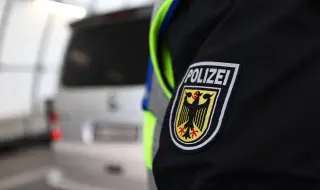
The new German Interior Minister Alexander Dobrinth announced a tightening of border controls, with the measure drawing criticism from the opposition and several neighboring countries, the Austrian APA agency reported, BTA reports.
According to information from the German police, the strengthened measures are already in effect in the provinces of Bavaria, Saxony, Lower Saxony and North Rhine-Westphalia, where additional officers have been sent to border crossings. The provinces of Rhineland-Palatinate and Saarland are expected to begin inspections soon.
Just hours after taking office, Dobrindt announced that in future asylum seekers could still be turned away at the border - with the exception of pregnant women, children and other vulnerable groups.
The measures were sharply criticized by Poland and Switzerland.
“From Switzerland's perspective, the systematic return of migrants at the border violates the law“, the Swiss Ministry of Justice said on the X platform. Justice Minister Beat Jans proposed a ministerial meeting, but did not specify how Switzerland would deal with rejected asylum seekers.
Polish Prime Minister Donald Tusk also expressed strong dissatisfaction during the visit of new Chancellor Friedrich Merz to Warsaw:
“Germany can accept whoever it wants. "Poland will only accept those it decides to," Tusk said, warning against creating the impression that Germany is "transferring" migrants to Poland.
Austria maintained a moderate tone. Interior Minister Gerhard Karner stressed that the country would not tolerate illegal returns of people, but welcomed Germany's efforts in the fight against smuggling and illegal migration. Foreign Minister Beate Meinl-Reisinger also said that she expected Germany to comply with European law.
The European Commission reacted cautiously. EU Commissioner for Migration Magnus Brunner commented that the issue would be examined carefully and talks with Berlin continued almost daily.
The question of the legality of returns remains controversial. According to some experts, current EU legislation does not allow such actions, especially when controls are not carried out directly at the border, but slightly behind it.
However, the German police union claims that the situation is clear. The vice-chairman of the union, Heiko Tegatz, stressed that Germany has agreements with all neighboring countries and that the entry of a person is considered a fact only after the completion of the border check, regardless of where the checkpoint is located.
Domestic political reactions in Germany are also contradictory. The leader of the "Greens" Franziska Brantner criticized the lack of coordination with neighboring countries and stressed the need for European solidarity. At the same time, the representative of the Christian Democratic Union, Alexander Trom, defended the new rules as "the first step in the migration turnaround".
The leader of the Christian Social Union and Prime Minister of Bavaria, Markus Söder, described the measures as the beginning of a "asylum policy turnaround":
"In Germany, the old practice is being applied again, as before 2015", he said in X.