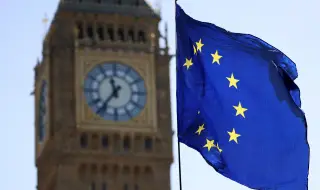
The United Kingdom yesterday agreed the most significant restart of its relations with the European Union since Brexit, with both sides welcoming agreements on everything from trade to migration to security and defense. Below are the main points agreed, writes BTA, citing "Reuters".
DEFENCE AND SECURITY PACT
The British Labour government and the EU have concluded a defense and security pact that previous Conservative governments chose not to discuss after Brexit was agreed.
Both sides agree that it is imperative for European countries to work more closely together on defense, given Russia's invasion of Ukraine and calls by US President Donald Trump for European NATO members to shoulder more of the alliance's financial burden.
As part of the reset, Britain will negotiate a new defense security and partnership strategy, which it says will "pave the way" for British companies to gain access to the 150 billion program. euros to rearmament Europe.
The UK will also consider taking part in civil and military crisis management and will be able to take part in joint public procurement with the bloc.
FOOD STANDARDS
Apart from the defence and security partnership, the rest of the deal was set out in a "common understanding" document, which lists areas of agreement and shared intentions, while noting that some details still need to be finalised in the coming weeks and months.
Central to Labour's plans to re-energise relations with the EU was the EU veterinary agreement, which aims to prevent unnecessary checks on agricultural products such as meat and dairy products crossing borders.
The so-called sanitary and phytosanitary agreement will be open-ended, giving British businesses more security.
The agreement will maintain high food standards, which the UK also insisted should not be lowered in discussions with the US to remove tariffs.
MOBILITY
A youth mobility scheme to make it easier for young people under 30 to travel and work between the UK and the EU is a priority and both sides have said they will work towards a youth mobility deal.
The UK has said any scheme would be limited and time-limited.
UK Prime Minister Keir Starmer's office has reiterated that this would not mean a return to freedom of movement, with controls on how many people can use the scheme and how long they can stay.
The two sides have also agreed to work more closely to tackle illegal immigration. migration.
FISHING
The UK and the EU will extend full reciprocal access to each other's territorial waters for fishing until June 30, 2038, extending by 12 years the provisions that were due to expire in 2026.
The UK has said the deal will not increase the amount of fish that EU vessels can catch in British waters.
The UK will also invest £360m in its fishing industry for new technology and equipment to modernise the fleet.
The post-Brexit trade deal transfers existing quotas to the bloc for a transition period, after which they will be renegotiated on an annual or multi-annual basis.
Fishing has long been a source of tension. The EU has taken the UK to court over a ban on sand eel fishing in UK waters.
ELECTRICITY
The UK left the EU's internal energy market after Brexit, but the UK energy industry is pushing for more effective and closer electricity trading agreements with the bloc.
The two countries will now explore Britain's participation in the EU's internal electricity market.
The UK imported around 14% of its electricity in 2024, a record level, through energy links with Belgium, Denmark, France and Norway.
CARBON MARKETS
Many EU and UK businesses have called for the EU and UK to link carbon markets. They are already collaborating on charging power plants and other industrial enterprises for their carbon emissions to meet climate goals.
The UK and the EU will now work to create a link between their emissions trading systems - which the UK says will improve energy security and help businesses avoid the EU's carbon tax due to come into force next year.
Industry analysts have said linking the two carbon markets is likely to lead to higher prices in the UK, which are lower than in the EU.
OTHER AREAS
Mutual recognition of some professional qualifications, changes to make it easier for artists to travel and data sharing are areas where the UK and the EU could seek a future agreement.