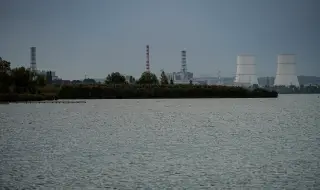
The Danish investigative platform Danwatch and the German magazine Der Spiegel published a sensational investigation on May 28, revealing a serious security breach in Russia's strategic nuclear forces, BTA reports.
Journalists have gained access to over two million documents from Russian public procurement databases. These include detailed drawings, tunnel diagrams, security plans and the internal layout of strategic facilities related to the Avangard hypersonic missile system.
The investigation focuses on the launch bases of the 621st and 368th missile regiments near the city of Yasny, Orenburg region - one of the key locations for land-based intercontinental ballistic missiles in Russia.
Although Russia has been switching to closed tenders since 2020, the journalists managed to bypass the protection systems through proxy servers located in Russia, Kazakhstan and Belarus. They reached documents valid until mid-2024.
The documents reveal that since 2009, Russia has been conducting a large-scale modernization of its nuclear arsenal. New barracks, command centers, reinforced concrete structures, observation towers and underground tunnel systems have been built. Advanced security systems are also being introduced, including remotely controlled firing positions and air defense.
The information leak also reveals serious vulnerabilities - unfortified areas and weak areas in surveillance that could be used by foreign services for sabotage. Experts describe the breach as "unprecedented" and potentially extremely dangerous for Russia's national security.
The investigation also raises questions about the involvement of Western companies in the construction of the strategic facilities. The German company Knauf, as well as the Danish companies Danfoss, Grundfos and Rockwool, are named as suppliers of construction materials - including cement, insulation and plaster. Although the companies deny knowledge of the final destination of their products, Danish authorities have already begun inspections.
Knauf claims that its Russian subsidiaries act autonomously, but the investigation casts doubt on this, showing the presence of centralized control from Germany.
The BBC's military analyst Pavel Aksyonov notes that the availability of such detailed information in the public domain makes Russian nuclear sites significantly more vulnerable to air strikes and sabotage. This could force Moscow to relocate or completely reconstruct entire complexes - a process that would cost billions of dollars and years of effort.
The revelations come against a backdrop of global instability and a new phase of nuclear confrontation. “Avangard“ - a missile system capable of reaching hypersonic speeds and carrying a nuclear warhead - is a symbol of Russian military power in response to the expanding NATO and Western technological advances in defense.
While satellite images have been the main tool for monitoring such facilities, now for the first time journalists are getting access to internal details - from the plans of observation towers to the location of sanitary facilities.
“This is not just a breakthrough, it is a gaping chasm in Russia's information security“, says Danwatch co-founder Hans Christensen, a nuclear weapons expert. He warns that if these documents fall into the hands of hostile states or groups, the possibilities for sabotage or precision strikes significantly increase.
The Kremlin is expected to take measures to strengthen control over access to military information and seek accountability for the leak. At the same time, the investigation reinforces the positions of Western allies on the need to strengthen missile defense and deterrence measures.