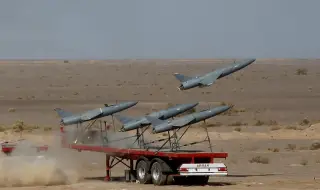
Russia continues to produce and stockpile missiles and unmanned aerial vehicles with which to strike Ukraine.
This shows that Moscow continues to strive to win the war by military means.
The Institute for the Study of War warns about this in its daily analysis.
On June 3, the Ukrainian publication "New Voice" reported, citing the Main Directorate of Military Intelligence of Ukraine (GUR), that by mid-May 2025. Russian forces have stockpiled over 13,000 ballistic, cruise and other missiles.
Among them are almost 600 Iskander-M ballistic missiles, over 100 Kinzhal hypersonic ballistic missiles, almost 300 Kh-101 cruise missiles, over 400 Kalibr cruise missiles, up to 300 Kh-22/32 cruise missiles, around 700 Onyx cruise missiles and Zircon anti-ship missiles, about 60 North Korean-made KN-23 ballistic missiles, and about 11,000 S-300/400 air defense missiles.
Russia can also produce about 150-200 missiles per month, including: 60 to 70 Iskander-M missiles, 10 to 15 Kinzhal missiles, 20 to 30 Kh-101 missiles, 25 to 30 Kalibr missiles, up to 10 Kh-32 missiles, and a total of 20 to 30 Onyx missiles. and "Zircon".
Before June 1, Russia had been increasingly launching missile strikes against Ukraine, but Kiev's response against the Kremlin's strategic aviation and airfields will reduce that capability.
"Shahed" drones have long dominated Russian strike packages, and Russian forces have recently been using more ground-launched ballistic missiles than air-launched cruise missiles.
ISW continues to assess that Russian efforts to increase domestic production of drones and missiles and the ongoing adaptation of strike packages are likely part of a broader effort to prepare for a long war in Ukraine and possibly a future war against NATO.
Kremlin officials have publicly acknowledged that Russia is seeking the "total destruction" of of Ukraine, which shows Moscow's disinterest in bona fide peace negotiations and a quick resolution of the war.
On June 3, Ukraine struck the Crimean bridge across the Kerch Strait for the third time since the start of Russia's full-scale invasion of Ukraine.