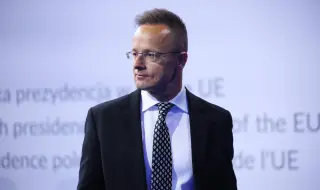
Hungary and Croatia are working actively to further develop bilateral cooperation, Hungarian Minister of Foreign Affairs and Trade Péter Szijjártó said today during a meeting in Nad Kaníža, southwestern Hungary. According to him, all conditions for such a development are already in place, the Hungarian news agency MTI reported, quoted by BTA.
At a joint press conference with Croatian Foreign Minister Gordan Gürlıç-Radman, Szijjártó emphasized Budapest's aspiration for good neighborly relations with all neighbors, including Croatia.
The Hungarian first diplomat thanked Gürlıç-Radman for Croatia not joining the "ranks of those who make groundless accusations and slander the Hungarian government" in connection with the national campaign against the so-called "gender propaganda", aimed at protecting children.
As a basis for enhanced cooperation, Szijjártó pointed to the participation of the Hungarian Air Force in the protection of Croatian airspace until the end of the year, as well as joint support for national minorities. He stated that the Hungarian state fully supports the Croatian community in Hungary and expressed satisfaction that the same applies to the Hungarian community in Croatia.
Minister Szijjártó announced specific infrastructure projects: the construction of a new bridge at Murákéresztúr, new road connections at Szárok and Zákány, as well as an accelerated extension of the M6 motorway, which will create a new highway connection between the two countries.
In the energy sector, Hungary and Croatia plan to deepen cooperation, with the largest energy companies from both countries - MOL and MVM - already conducting negotiations in this direction.
Szijjártó stressed that Budapest will never support decisions by Brussels that would threaten the country's energy security or increase prices for consumers. He strongly opposed plans to ban energy imports from Russia, stressing that energy independence is a key element of the state's sovereignty.
“We will only make a change if we are offered a cheaper and more reliable alternative. We will not succumb to external pressure and we will not sacrifice well-functioning partnerships,“ the minister said.