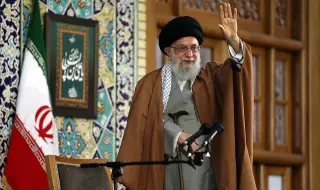
Iran's 86-year-old Supreme Leader Ayatollah Ali Khamenei seems increasingly a lonely figure. According to five people familiar with Ayatollah Ali Khamenei's decision-making process, other internal figures who were not targeted by the Israeli strikes remain key and influential. Among them are senior political, economic and diplomatic advisers. One of the sources, who regularly attends meetings with Khamenei, described the risk of Iran misjudgments on matters of defense and internal stability as "extremely dangerous". Several senior military commanders have been killed since Friday, including Khamenei's top advisers from the Islamic Revolutionary Guard Corps, Iran's elite military force: Guards commander-in-chief Hossein Salami, Aerospace Chief Amir Ali Hajizadeh, who oversaw Iran's ballistic missile program, and intelligence chief Mohammad Kazemi. The sources said the men were part of the supreme leader's inner circle of approximately 15-20 advisers, including Guard commanders, clerics and politicians, including three who are present or have been attended meetings with the leader on important issues, and two close to officials who regularly attend.
His entourage meets ad hoc when Khamenei’s office contacts relevant advisers to gather at his Tehran compound to discuss a major decision, all the sources said. The members are characterized by unwavering loyalty to him and the ideology of the Islamic Republic, they added.
Khamenei, who was imprisoned before the 1979 revolution and crippled by a bomb attack before becoming leader in 1989, is deeply committed to upholding Iran's Islamic system of government and deeply distrusts the West.
Under Iran's system of government, he holds supreme command of the armed forces, has the authority to declare war and can appoint or dismiss senior figures including military commanders and judges.
Khamenei makes the final decision on important issues, although he values advice, listens carefully to different perspectives and often seeks additional information from his advisers, according to one source who attended the meetings.
"There are two things you can say about Khamenei: He is extremely stubborn, but he is also extremely cautious. He is very cautious. That's why he has been in power for so long," said Alex Vatanka, director of the Iran Program at the Middle East Institute, a think tank. in Washington.
"Khamenei is in a pretty good position to do the basic cost-benefit analysis that really fundamentally addresses one issue more important than anything else: the survival of the regime."
The focus on survival has been tested many times. Khamenei has used the Revolutionary Guard and its affiliated Basij militia to quell nationwide protests in 1999, 2009 and 2022.
While security forces have always managed to outlast demonstrators and restore state rule, years of Western sanctions have caused widespread economic problems that analysts say could eventually spark domestic unrest.
The stakes could hardly be higher for Khamenei, who faces an escalating war with Israel, which has targeted nuclear and military sites and personnel, drawing retaliatory missile fire from Iran, insiders and analysts say.
The five people familiar with Khamenei’s decision-making process stressed that other insiders who were not targeted by Israel’s strikes remain important and influential, including senior policy advisers, economic and diplomatic matters.
According to two of the sources, Khamenei appoints such advisers to respond to emerging crises and extend his influence across a wide range of institutions, from the military and security services to cultural, political and economic structures.
By operating in this way - including by intervening in bodies that are normally subordinate to the elected president - the supreme leader's office often plays a leading role not only in major state decisions but also in implementing even minor initiatives, the sources said.
Over the past 20 years, his son Mojtaba has taken an increasingly central place in this process, according to the sources, building a role that bridges the gap between the individuals, factions and organizations involved to coordinate their actions on specific issues.
Mojtaba, a mid-ranking cleric seen by some insiders as a potential successor to his aging father, has built close ties with the Guards, giving him additional influence in Iran’s political and security apparatus, the sources said.
Ali Asghar Hijazi, the deputy head of political security in Khamenei’s office, has been involved in making sensitive security-related decisions and is often described as the most influential intelligence official in Iran, the sources said.
Meanwhile, Khamenei’s chief of staff, Mohammad Golpayeghani, as well as former Iranian foreign ministers Ali Akbar Velayati and Kamal Kharazmi, and former parliament speaker Ali Larijani, remain confidants on diplomatic and domestic policy issues, such as the nuclear dispute, the sources said.
The loss of the IRGC commanders The Islamic Revolutionary Guard Corps (IRGC) is nevertheless dismantling the upper echelons of a military organization that he has placed at the center of power since becoming supreme leader in 1989, relying on it for both domestic security and Iran's regional strategy. While the chain of command of the regular army runs through the defense ministry under the president-elect, the Guards report directly to Khamenei, providing the best military equipment for its ground, air and naval branches and giving its commanders a major state role. As he faces one of the most dangerous moments in the Islamic Republic's history, Khamenei finds himself further isolated by the recent losses of other key advisors in the region, as Iran's "Axis of Resistance" coalition was shaken by Israel.
Hezbollah leader Hassan Nasrallah, who was personally close to the Iranian leader, was killed in an Israeli airstrike last September, and Syrian President Bashar al-Assad was overthrown by rebels in December.