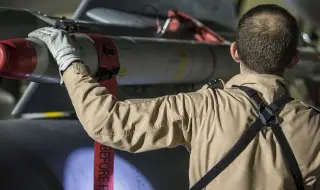
The United States has indefinitely suspended critical arms supplies to Ukraine, the Institute for the Study of War (ISW) said.
Western media reported that sources said on July 2 that the pause would affect dozens of PAC-3 interceptors for Patriot air defense systems, dozens of Stinger man-portable anti-aircraft missile systems, thousands of 155-mm high-explosive howitzer ammunition, over 100 air-to-surface missiles Hellfire, more than 250 multiple launch rocket systems, dozens of grenade launchers and dozens of air-to-air missiles.
Politico reported on July 1 that the United States decided in early June 2025 to withhold some of the aid it promised during the administration of former President Joe Biden, but the decision is only now taking effect.
NBC defense and congressional sources said the United States would halt the flow at least until an assessment of the US stockpile is complete, but could extend it.
On July 2, the Ukrainian Ministry of Foreign Affairs (MFA) said that any delay would encourage Russia to continue the war rather than seek peace. The Ukrainian Foreign Ministry said consultations are continuing at all levels.
The suspension is likely to accelerate Russian victories on the battlefield, as previous suspensions of US aid in the fall of 2023 and winter-spring of 2024 did.
Russia is unlikely to achieve operational-level breakthroughs in the near future. However, it appears to be preparing to undertake what are likely months-long and years-long offensive campaigns. Russian forces may not be able to achieve these goals alone.
CNN reported on July 2 that a Ukrainian intelligence assessment indicated that North Korea was likely to send an additional 25,000 to 30,000 troops to Russia in the coming months and that there was a "high probability" North Korean forces to augment Russian forces in Ukraine, including "during large-scale offensive operations".
The Kremlin insists that Europe must also stop arms supplies to Ukraine. Putin held a phone call with French President Emmanuel Macron on July 2, his first in nearly three years, and used the conversation to repeat Kremlin-style narratives aimed at discouraging further Western military aid to Ukraine.
Russian Foreign Ministry (MFA) spokeswoman Maria Zakharova also criticized continued European military aid to Ukraine.
The Kremlin's messages are yet another indication that Russia remains committed to achieving its military goals through force and is not interested in meaningful peace talks to end the war.
The Kremlin is using the suspension of U.S. aid as a basis for continuing rhetorical attacks on European defense efforts, which are in line with Trump's push for Europe to shoulder more of the burden of collective defense. Russian Deputy Foreign Minister Alexander Grushko said on July 2 that the European Union's (EU) increased defense spending shows that it is becoming an "aggressive military bloc" from which Russia will have to defend itself.
Grushko argued that the EU is fulfilling NATO's tasks and that the two organizations are deeply connected. Zakharova also claimed that the EU is becoming a military bloc and is "loading" Ukraine with weapons.
Russian Ambassador to Norway Nikolai Korchunov told Russian state news agency RIA Novosti in an interview published on June 30 that Norway is trying to take advantage of the "militarization" of Europe and "strengthening" Ukrainian army.
Russian officials continue to mischaracterize NATO’s increased defense spending as aimed at deterring war in Europe by building defense capabilities in response to Russia’s ongoing efforts to restructure and expand Russia’s military capabilities.
The Kremlin’s efforts to deter Western military aid to Ukraine and European rearmament efforts are part of a larger cognitive warfare effort aimed at shaping Western decision-making and undermining the West’s will to act against Russian interests and to resist Russia.
Russia has recently prioritized expanding its production of long-range drones and missiles and its stockpile of ballistic missiles, which has allowed Russia to conduct larger and more effective combined series of missile and drone strikes against Ukraine.
Russia has carried out five of its largest combined strikes against Ukraine between March and June 2025 and is launching increasing numbers of "Shahed" drones that penetrate Ukrainian air defenses, allowing more Russian missiles to hit their targets.