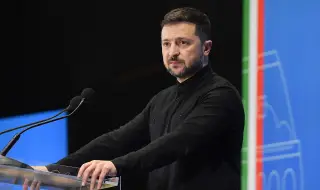
Western partners, in particular French President Emmanuel Macron and European Council President Antonio Costa, have tried to persuade Ukrainian President Volodymyr Zelensky not to sign Law No. 12414, which they believe weakens the independence of anti-corruption institutions. This is reported by the Financial Times, citing its sources, Focus reports.
The publication notes that the bill was submitted for signature by the president with unusual speed, which has caused concern among international partners. They called on the Ukrainian authorities to reconsider their decision.
On July 22, Macron and Costa reportedly spoke by phone with Zelensky in an attempt to persuade him not to approve the controversial document.
On the same day, the ambassadors of the G7 countries met with Prosecutor General Ruslan Kravchenko and the head of the Security Service of Ukraine (SBU) Vasyl Malyuk. They expressed serious concerns about the potential weakening of the anti-corruption framework in the country. According to FT sources, Malyuk tried to calm the concerns of Western diplomats.
A curious detail cited by the publication is that during the meeting, the diplomats were kept in the room for over two hours without access to phones. One of the representatives of the foreign delegation perceived this as an attempt to limit their ability to immediately inform their governments about what was happening in Kiev.
Despite the pressure, on July 24, President Zelensky announced that he had signed the law, emphasizing that it "guarantees the independence of anti-corruption bodies." According to him, the most important thing is the presence of "real tools", and not just formal guarantees.