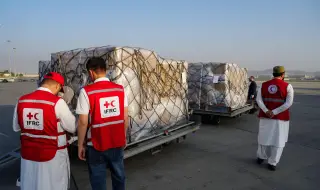
The UN is seeking $139.6 million to help half a million people affected by earthquakes in eastern Afghanistan, reports “Reuters“, reports News.bg.
The organization has urged donor countries to put aside any reservations about the Taliban authorities.
The worst earthquake in Afghanistan in years, which struck on the night of August 31 to September 1, killed more than 2,200 people and was followed by a series of powerful aftershocks. Tens of thousands of people have been left homeless, and local residents fear more landslides.
Lower temperatures expected in the coming weeks will make conditions even more difficult for survivors in remote mountainous areas, warned Indrika Ratwatte, the UN humanitarian coordinator for Afghanistan.
“This is a moment when the international community must step up and show solidarity with a population that has already suffered so much“, he told a briefing in Geneva.
“Lives are at stake right now. In two or three more weeks, winter temperatures will reach these high-altitude communities,“ Ratwatte added.
The UN describes the humanitarian crisis in Afghanistan as one of the worst in the world. However, funding has fallen by 35% compared to last year due to cuts by major donors, including the United States. Rathwate said the lack of funds has led to the suspension of a helicopter that would have facilitated access to remote villages.
When asked about the reasons for the loss of funding, he cited multiple competing crises, as well as the reluctance of many donors to provide aid to the Taliban government because of its policies towards women.
“Some governments have reservations about the policies of the authorities,” Rathwate said. “Our call has always been to focus on the people.”
He said the United States has yet to release funds for humanitarian aid since the earthquake.
The World Health Organization has asked the Taliban authorities to lift restrictions on female aid workers and allow them to travel without male companions.
Including women in UN teams remains “a challenge,” Rathwate acknowledged. "Our effort is to try to have at least one female worker on every team. It's not possible for all teams right now, but we're working on it," he added.