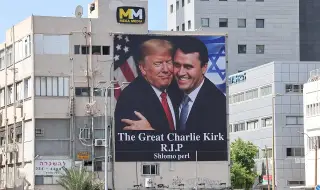
The situation in the US is somewhat similar to that of the 1960s/70s: opposition is growing and there will be a lot more violence on the streets of the US, warns a Harvard expert.
"It's actually not particularly surprising," says foreign policy expert and director of the "Future of Diplomacy" project at Harvard, Catherine Kluwer-Ashbrook, regarding the assassination of conservative activist Charlie Kirk. "The horrific attack fits into a several-month escalation of political violence in the US," she tells ARD. The expert recalls the cases from June this year, when two representatives of the Minnesota Democratic Party were shot by a man who had a political motive.
Political violence is increasing at both ends of the spectrum, Ashbrook believes. Charlie Kirk's popularity contributes to the enormous weight of his murder this week. He was one of the motivators of young people in the MAGA (Make America Great Again) movement and was an important ally of Donald Trump. Kirk was particularly important in attracting young voters to Trump in the last election, the expert believes. "The reaction of the US president after the murder of Kirk demonstrates how important he is".
The situation is somewhat similar to the 1960s and 1970s
According to Ashbrook, the fact that Trump, as well as some conservative activists, immediately blamed "the left" for Kirk's murder makes this a very dangerous moment. For example, Stephen Miller, one of the most senior representatives of the Trump administration, has repeatedly stated that the Democratic Party is "full of left-wing terrorists".
"Such hyperbolic rhetoric is being heard from various quarters, including from the president himself. This is all very speculative. A moment of political uncertainty is being used to further worsen the situation," Ashbrook told ARD.
In memory of Kirk, Trump ordered all American flags at the country's embassies around the world to be lowered to half-staff for three days. This did not happen when the Minnesota state senator and her husband were shot in June. That's why he (the US president) pardoned those convicted of the January 6, 2021 Capitol storming. These are people who most likely approve of the use of violence for political purposes, the expert commented.
"Now the situation is somewhat similar to that in the 1960s and 1970s in the US - the era of the Civil Rights Movement. But then there were attempts to assassinate both Gerald Ford and President Reagan. Political violence in the US usually always incites an entire movement. The domestic political situation is very dangerous right now," says Ashbrook.
The debate is absent
According to the expert, we are already seeing how the murder of Charlie Kirk is being used to extract political capital. In her words, this is a new combination - a quasi-political figure like Kirk becomes someone in the context of the government and the state. That's why flags are lowered as a sign of mourning, a gesture that hasn't been done before. "Now there will be attempts to unite the MAGA coalition, but President Trump will also use the moment to push through some of his other plans. Things will escalate and we will probably see a lot of violence on the streets of the United States," Ashbrook commented.
The Republican Party is already preparing for the midterm elections in about a year. We saw this in Texas, but also in the national changes in voting rights. This is an issue that needs to be given serious attention. But this will not lead to a neutral political atmosphere and political discourse in which ideas can be discussed, says Ashbrook. "By the way, that is Charlie Kirk's greatest legacy. He has always faced political disputes and debates. That is what he wanted to achieve in Utah. In fact, there are few such people in the MAGA movement. "We need more neutral, open political debates in American discourse, not less," Kathrin Klüver-Ashbrook told German public broadcaster ARD.