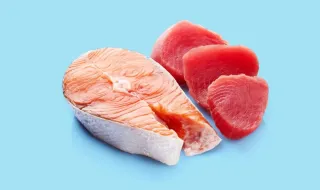
At first glance, tuna, swordfish, and shark may seem like the more nutritious choices because of their size. From a nutritional standpoint, however, small fish like sardines, anchovies, and herring often have an important advantage: they tend to contain less mercury, while still providing omega-3 fatty acids, protein, and a range of vitamins and minerals.
The reason lies in the food chain. Methylmercury accumulates in fish, and its concentration increases when a fish eats many other fish. Large predators live longer, feed higher up the food chain, and so gradually accumulate more of this contaminant. The European Food Safety Authority lists shark, swordfish and large tuna among the fish that can accumulate mercury in higher amounts.
More nutrients, less risk
Sardines, anchovies and herring are fatty fish rich in the long-chain omega-3 fatty acids EPA and DHA. They are an important part of the diet because fish also provide high-quality protein, vitamin B12, vitamin D, selenium and other minerals. Sardines, eaten with the bones, can also contribute calcium.
“As a doctor, I recommend that people eat fish,“ says Emily O'Kane, an associate professor of population medicine at Harvard Medical School. She advises choosing a variety of fish and limiting fish with high mercury content.
The U.S. Food and Drug Administration includes sardines, anchovies, herring and Atlantic mackerel among the “best choices”. In the same group are salmon, trout, pollock and canned light tuna. Shark, swordfish, king mackerel and bigeye tuna are in the category with the highest mercury levels.
Size is not the only criterion
Small fish is not automatically safe, and large fish is not off-limits for everyone. Mercury content depends on the specific species, age, habitat and diet. The difference between the types of mackerel is telling: Atlantic mackerel is among the lower-mercury fish, while king mackerel is among those to avoid.
The same goes for tuna. Canned light tuna, which is usually made from smaller species, has a lower mercury content than albacore tuna. Therefore, the choice should be made by type, not just by the label "tuna".
The FDA and EPA recommend that adults include fish in their diet at least twice a week, choosing a variety of types with lower mercury content. For pregnant women, nursing women and children, the recommendation is especially important, since the developing nervous system is more sensitive to the effects of methylmercury.
There is another detail with canned products: anchovies are often salted and can contain a lot of sodium. Therefore, the most sensible approach is variety — more sardines, anchovies, herring and other fish with low mercury content, and large predatory species should not be the main source of fish on the menu.
Sources: health.harvard.edu