


Christmas decorations create a festive atmosphere in the home, but for pets they often hide serious risks. Veterinary organizations report that during the Christmas and New Year holidays, the number of incidents with dogs and cats related to Christmas trees, garlands and electric lights increases significantly, writes the American Veterinary Medical Association (AVMA).
Among the most dangerous decorative elements are thin and long objects such as ribbons, garlands and the so-called “angel hair“. Veterinary surgeons from the VCA Animal Hospitals network point out that these decorations are often swallowed, especially by cats, and can become so-called linear foreign bodies. They cause blockages and ruptures of the intestines and in many cases require emergency surgery. Experts emphasize that in such an incident, attempts should not be made to remove the object at home.
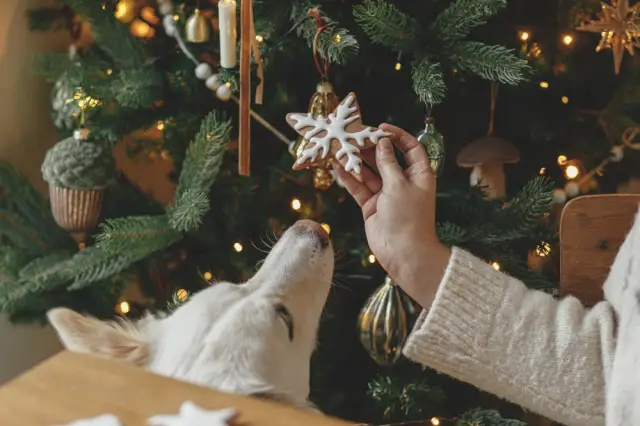
Electric lights and cables also pose a serious risk. According to the American Veterinary Medical Association, chewing on them can lead to electric shock, burns to the lips and tongue, and fires. The most commonly injured animals are young and highly curious dogs and cats.
The Christmas tree itself is not harmless either. Toxicologists from the ASPCA - the American Society for the Prevention of Cruelty to Animals - warn that an unstable tree can fall and cause injuries. An additional danger is the stand of the tree, especially if it has small plastic elements on it, which, if swallowed, can lead to vomiting and gastrointestinal disorders.
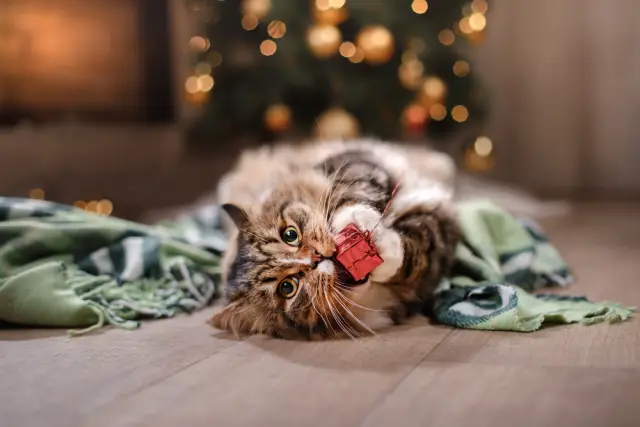
The ASPCA also pays attention to seasonal plants. Mistletoe and pine branches can cause digestive problems and heart rhythm disturbances, and lilies are especially dangerous for cats - even a small amount can lead to acute kidney failure. Poinsettia usually causes milder symptoms, but it is also not considered completely safe.
Food poisoning in pets also increases sharply during the holidays. Data from the Pet Poison Helpline shows that chocolate is among the most common causes of poisoning in dogs in December. The reason is theobromine - a substance that animals cannot break down effectively. Also dangerous are sweets with sugar substitutes, as well as fatty leftovers from the holiday table, toxicologists note.
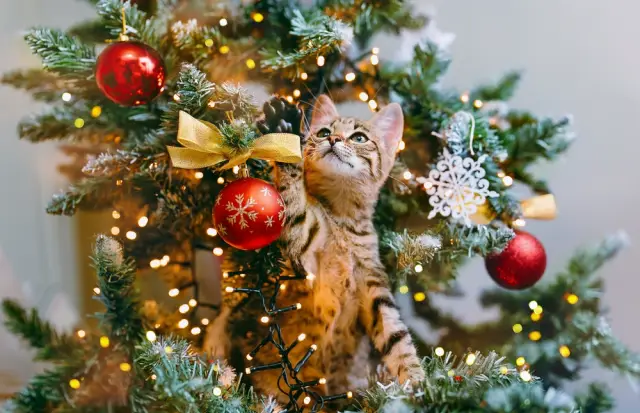
What veterinarians advise:
-
using unbreakable decorations and avoiding stringy decorations;
-
stable fixing of the tree and limiting access to its base;
-
hiding or protecting electrical cables;
-
avoiding toxic plants in homes with animals;
-
keeping food out of reach of pets.
Veterinary specialists are categorical that if you suspect ingestion of a dangerous object, poisoning or electric shock, you should immediately consult a doctor. Timely response often prevents serious complications and saves lives, the American Veterinary Medical Association emphasizes.
Christmas decorations can be safe if they are selected and arranged with the behavior and natural curiosity of four-legged family members in mind.