


Road traumatism... What are the most common injuries that occur in an accident? Dr. Nikolay Ivanov, part of the team of the Department of Orthopedics, Traumatology, Reconstructive Surgery and Physiotherapy of the Military Medical Academy, spoke to FACTI.
- Dr. Ivanov, we talk a lot about the topic of road accidents, but let's talk about the injuries from them. What are the most common injuries from an accident?
- In road accidents, the spectrum of injuries is very wide, but most often we encounter severe injuries to the head and chest, fractures of limbs, injuries to the pelvis and internal organs. In frontal impacts, for example, craniocerebral injuries are often observed, which can be life-threatening. In side impacts - injuries to the chest and abdomen are particularly dangerous, because the internal organs absorb enormous kinetic energy. Polytrauma is not uncommon - when a patient has several serious injuries at the same time, which complicates treatment and increases the risk to his life.
- The more traffic, because summer is over, the more accidents, right?
- Yes, this is a regularity. At the end of the summer season, when the roads are busy with travel, the risk of accidents increases significantly. More cars, more tired drivers after long journeys, more impatience and distraction - all this increases the likelihood of accidents. Statistics always show a peak in traffic accidents during these periods.
- How do you act in the case of a seriously injured patient, who we can say is on the verge of death?
- In these situations, you enter the "battle for seconds“. The first rule is stabilization – restoration of breathing, heart rate and blood pressure. A quick diagnosis follows to establish where the main damage that threatens life is – whether it is massive bleeding, severe craniocerebral trauma, rupture of an organ. Then the team acts in priority: the most urgent is controlled first, then the rest is moved on.
This is exactly where the importance of the MMA Traumatology School comes in – it is among the leading in the country and it is to us that the most severe cases from all over Bulgaria are often referred. This is a huge responsibility, but also recognition of the experience and capacity of our teams.
- You are a doctor, can you get used to death…
- There is no getting used to it. And there shouldn't be. Every patient we lose remains a heavy memory. The doctor learns to continue working despite the pain, because the next patient is already waiting for help. If a person starts to accept death as “routine“, then you lose your humanity. The difference is that over time you develop professional mechanisms that allow you to remain focused and useful, even in the most dramatic situations.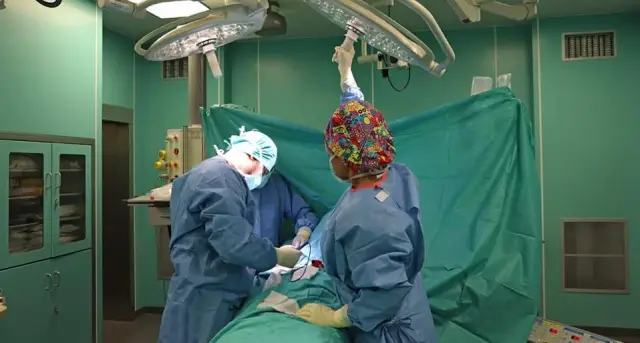
- The surgeon likes to “put the broken back together”. And then, if there is no finger on the hand, or arm, or leg… How do you explain this to the patient…
- This is one of the most difficult parts of our job – talking to the patient or his family after a major operation, when we were forced, for example, to amputate a limb to save a life. We explain honestly and clearly: life was at risk, and sometimes preserving the limb means a risk of death. It is a huge trauma for a person to hear that they are losing a part of themselves, but gradually they realize that they are alive precisely thanks to this intervention. Our role is to provide support and confidence that there is life after such a loss – with rehabilitation, prosthetics and adaptation.
- How does speed affect injuries? What is the speed after which things become and for you very complicated?
- The higher the speed, the more severe the injuries. This is simple physics. In impacts at speeds above 80-90 km/h, the risk of severe, life-threatening injuries is enormous. At 120-130 km/h, we are already talking about situations in which even the most modern medicine has limited options. These are the most complex cases - when the injuries are so massive that even with immediate intervention the chances are minimal.
- How much and how does the seat belt protect the driver? What injuries does the seat belt lead to?
- The seat belt saves lives. This is categorical. Yes, it sometimes causes injuries - broken ribs, chest or abdominal injuries, but these injuries are incomparably milder than the alternative. Without a seat belt, a person can be thrown from the car or suffer severe craniocerebral and thoracic injuries. The belt holds the body in the seat, distributes the force of the impact and increases the chances of survival many times over.
- What are the most common injuries to passengers in the back seats of a car, whether they also use a seat belt or not?
- If passengers in the back seat are not wearing a seat belt, they literally become “projectiles” in an accident – they hit the front seats or bump into each other, which leads to severe injuries to the head, chest and limbs. In addition, they also endanger the passengers in the front. When they are wearing a seat belt, the injuries are significantly milder – contusions are possible, fractures are rarer, but the risk of a fatal outcome is reduced many times. Unfortunately, many people underestimate the rear seat belt, and it is just as important as the front one. Therefore, our task at the Military Medical Academy is not only to treat the consequences, but also to remind preventively how important it is for people to protect themselves. Because, no matter how powerful medicine is, sometimes they face traumas that are almost incompatible with life.