


In a world dominated by electrification, Porsche is preparing a real mechanical sensation. The Stuttgart company shocked the industry by filing a patent for a new architecture for a 12-cylinder engine with a W-configuration. This unit is radically different from all previously known solutions within the Volkswagen Group and represents a serious engineering innovation.
The difference between a VR6 and a real W
The previous iconic W12 engine, which found its way into models from Bentley and Volkswagen, was based on two joined VR6 blocks. This meant two rows of narrow-angle cylinders assembled at a wider angle, which made the configuration more like a “WW“ or “double V“.
The new Porsche patent describes an architecture that is a geometrically precise letter W, formed by three separate rows of cylinders. This configuration, according to a document filed last year and now published, was developed to reduce mechanical losses and increase the overall efficiency of the layout.
Engineering details for maximum efficiency
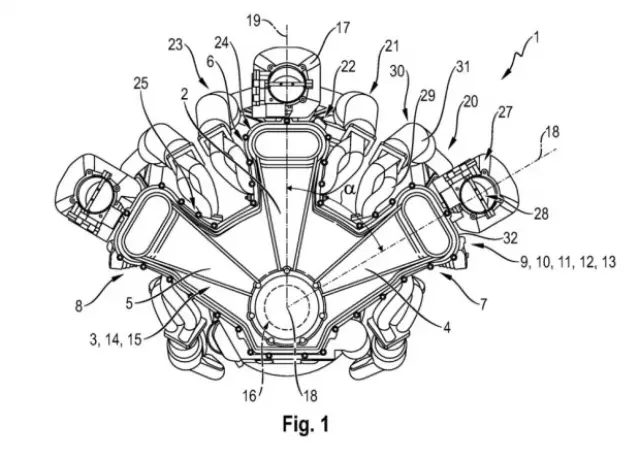
The key element in the patent is the design, focused on optimizing airflow.
Three rows of cylinders: The new architecture allows greater freedom in the design of the cylinder heads and gas distribution.
Optimization of the intake tract: The document states that the intake ports of each cylinder head are connected to a common air plenum, which is located centrally on the top of the engine. This plenum virtually covers the entire engine and provides the air with the shortest and most direct path to the intake valves, eliminating unnecessary bends.
Better charging and cooling: Minimizing pressure losses during intake, combined with direct air entry, improves cylinder charging (volumetric efficiency). In addition, the clear separation of the intake and exhaust zones contributes to better thermal management and stability of the unit under extreme loads.
Potential for record power
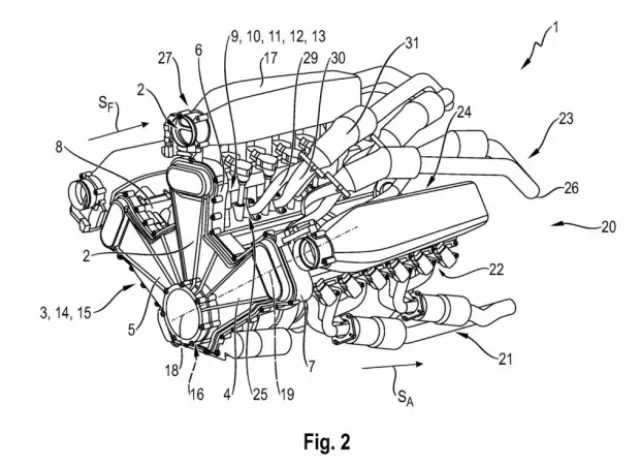
Porsche does not hide its ambitions. Engineers are considering the possibility of integrating three turbochargers or mechanical superchargers - a technically extremely complex, but potentially revolutionary solution for increasing power.
If this concept is implemented, the new W12 has the potential to surpass even Bentley's legendary 6.0-liter W12, which in its final version for the Mulliner Batur developed 740 hp (552 kW) and 1000 Nm of torque. This potential makes the new engine a serious contender for the title of the most powerful gasoline unit in Porsche history.
The future of W-configurations
Although Bentley officially says goodbye to its W12 in July 2024, Porsche's patent suggests that the Volkswagen Group is not ready to give up on complex and emotional multi-cylinder configurations.
Interestingly, the developed architecture can be adapted to a different number of cylinders. This opens the door to potentially creating new powertrains not only for Porsche, but also for Bugatti, which historically used W16 engines.
The idea of a new W12 from Porsche is both nostalgic for classic engines and innovative from an engineering point of view, demonstrating that high mechanics will remain a key part of the brand's DNA, even in the transition to electrification.