


On May 10, 1940, Winston Churchill became Prime Minister of Great Britain. Every year on May 9, the Victory Parade is held on Red Square in Moscow. It is a little-known fact that Churchill was the politician who fought Hitler the longest.
On the day he became Prime Minister of Great Britain, the Third Reich invaded Belgium, the Netherlands and France.
Sir Winston Churchill was also one of the few who foresaw the threat from Hitler before the outbreak of World War II.
From his speech before the House of Commons on the occasion of his inauguration as Prime Minister for the first time is the iconic phrase “I have nothing to offer you but blood, toil, tears and sweat”.
At the end of the war, Churchill participated in all the meetings of the Big Three - Tehran, Yalta and Potsdam, and the determination of the post-war world order. Churchill also coined the famous phrase about the Iron Curtain that descended across Europe from Szczecin to Trieste after the war.
In 1946, at the University of Zurich, he delivered one of the most important speeches on the future of Europe. In it, Churchill called for a move towards a “United States of Europe” and declared that “the first step in recreating the European family must be a partnership between France and Germany”, who had been mortal enemies only two years earlier. Five years after Churchill's speech in 1951 the Treaty of Paris was signed, laying the foundations of today's European Union.
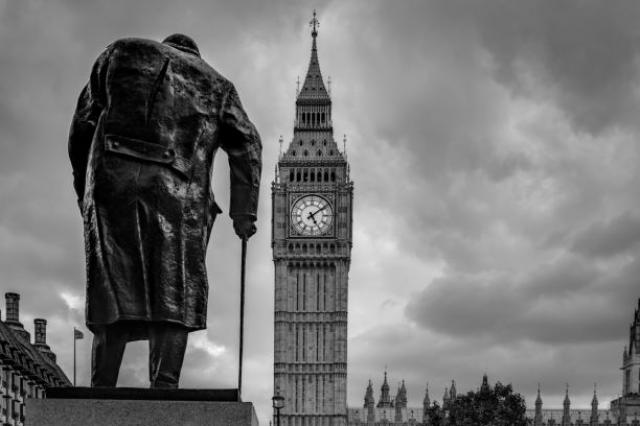
Previously, in March 1946, Churchill delivered what became known as the Fulton Speech, from which he remained in history with the words:
“From Szczecin on the Baltic Sea to Trieste on the Adriatic Sea, an iron curtain has descended over the continent. Behind this line lie all the capitals of the ancient states of Central and Eastern Europe. Warsaw, Berlin, Prague, Vienna, Budapest, Belgrade, Bucharest and Sofia, all these famous cities and the populations around them lie in what I must call the Soviet sphere and all are subject in one form or another not only to Soviet influence but also to a very high and in many cases increasing degree of control from Moscow.”