


The Winter War was a war between the Soviet Union and Finland. It began with a Soviet offensive on November 30, 1939 - three months after the start of World War II and the Soviet invasion of Poland. The hostilities ended on March 13, 1940 with the Moscow Peace Treaty. The attack was considered illegal by the League of Nations and the Soviet Union was expelled on December 14, 1939.
The Soviet forces had three times more soldiers than the Finns, thirty times more aircraft and a hundred times more tanks. However, the Red Army was decimated by Soviet leader Joseph Stalin during the Great Purge of 1937. Over 30,000 officers were executed or sent to prison, including those of the highest rank.
The Red Army in 1939 also had many inexperienced senior officers. Due to these facts, as well as the high commitment and morale of the Finnish forces, Finland was able to resist the Soviet invasion much longer than the Russians had expected. The Finnish forces inflicted staggering losses on the Red Army in the first 3–4 months. The hostilities were terminated in March 1940 with the signing of a peace treaty in Moscow.
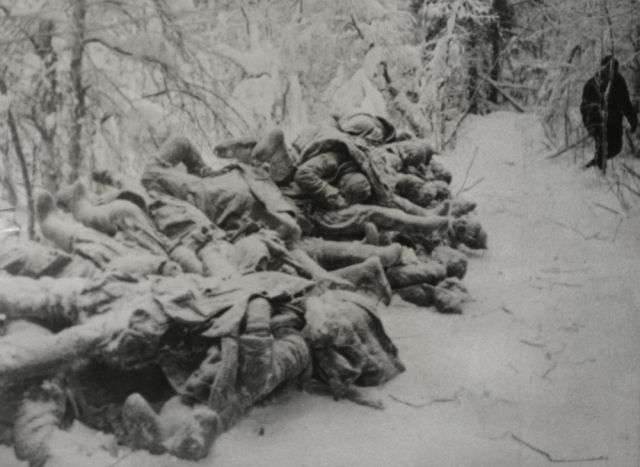
While the Finns suffered 22,800 killed and 43,500 wounded, the Soviet casualties were much higher - 200,000 killed and missing and 260,000 wounded. The difficulties experienced by the Red Army in overcoming an opponent who was clearly inferior to it gave Hitler a strong trump card and motive for attacking the USSR, even though at that time the two countries were still allies. The planning of Operation Barbarossa, which began on June 22, 1941, had been underway since early 1940.
The fact that the Finns' commander-in-chief, Carl Gustaf Emil Mannerheim, had been an active soldier in the Russian army until 1917, when Finland gained independence, also played a role in the good resistance of the Finns. The chosen tactics of guerrilla warfare, knowledge of local conditions, and the harsh winter also worked in favor of the Finns, who, although losing the war, retained their independence and ceded only 10 percent of their territory to the USSR.
Finland ceded 11% of its pre-war territory and 30% of its economic assets to the Soviet Union. Soviet losses at the front were heavy and the country's international reputation suffered.
The Soviet troops did not achieve their goal of completely conquering Finland, but they did capture a considerable amount of territory, including Lake Ladoga, Petsamo, and Sala.
However, the Finns retained their sovereignty and improved their international reputation.