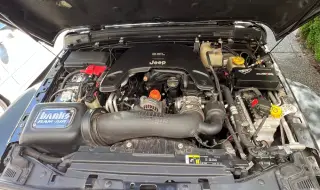
The heart of your car rarely gives up without warning. Before the engine finally gives up and leaves you in the middle of the road, the engine begins to "speak" in its own language of noises, smells and strange behavior. Automotive experts have systematized four critical signals that suggest that it's time for an urgent visit to the service center if you want to save yourself the headache of colossal expenses for a new unit.
The first and most capricious sign is atypical sounds
If you put your ear to the hood, any unusual knocking, clicking or piercing whistling is a red flag. Experts warn that the metallic knocking that accelerates along with the revs is probably the most ominous symphony – it often portends problems with the crank bearings or a stretched chain. If you detect a dry rattling, the hydraulic lifters are probably "starving" for oil, while a high-pitched squeal is usually a cry for help from worn out timing belts.
The second clue lies in the "breathing" of the engine - the color of the exhaust gases
This is where things get visual and quite alarming. Black smoke is a clear signal of a too-rich fuel mixture, but if a bluish cloud appears, things get serious: oil has penetrated where it shouldn't, signaling worn pistons. The most frightening, however, is thick white smoke with a sweet smell of acetone. This is a sure sign that antifreeze is entering the cylinders, which almost invariably ends in a major overhaul.
The third indicator is the loss of vitality in the operation of the unit
If you feel that the car accelerates sluggishly, and unpleasant vibrations and jerks appear at idle, then something deep in the mechanics is cracking. When you press the gas, and instead of power you get "squeak" or a sudden outage at the traffic light, your engine is literally begging for attention. These symptoms are often a harbinger of loss of compression or serious malfunctions in the fuel system.
Last but not least, trust your sense of smell
The car's interior should be a neutral zone, so any intrusive smell of raw gasoline or used oil is a reason to panic. Such odors are direct evidence of leaks of technical fluids, which not only destroy the engine, but also pose a risk of fire. The evolution of a small fault to a total loss often takes a few kilometers, so listen, look and smell carefully - your engine always tells you the truth.