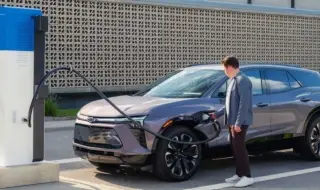
Owners of eco-friendly vehicles across the ocean are facing an unexpected and rather salty financial turn. The era of free passage on American highways for electric vehicles seems to be coming to its logical end, after a surprising bipartisan bill was introduced in the House of Representatives, loudly named the BUILD America 250 Act. If the initiative gets the green light, drivers of fully electric cars will have to fork out $ 130 a year, while owners of plug-in hybrids will be relieved by $ 35. The turmoil is complete, and the stakes are huge – The funds raised will go directly to patching potholes and modernizing the US highway network.
Apparently, nothing in this world is free! The whole philosophy behind the new tax is based on the fact that environmentally friendly alternatives on four wheels are effectively riding "free" in terms of road maintenance. While traditional gasoline and diesel machines regularly fill the coffers through taxes calculated into the price of each gallon of fuel, electric models have successfully flown under the Highway Fund's radar. Transportation and Infrastructure Committee Chairman Sam Graves was very clear – the goal is for everyone to bear their “fair share” of the burden. The plan envisages a gradual tightening of the belt: from 2029, the rate will increase by $5 every two years, until it reaches the final $150 for pure electric and $50 for plug-in hybrids.
However, green organizations and advocates of battery mobility immediately jumped to the pulpit and declared war on the proposal. According to them, such a fixed amount is a complete injustice and a frank axe aimed at people who have chosen a cleaner future. There is a catch - the average American behind the wheel of a conventional vehicle pays between $70 and $90 per year in federal excise taxes, which is significantly less than the requested new tax for electric vehicles. In addition, the tax on gasoline in the United States has not moved since 1993 and is stuck at a modest 18.3 cents per gallon, despite inflation and the huge technological leap of modern internal combustion engines.
In addition, reproaches are also pouring in for the lack of any flexibility in the new regulation. The balancing act is obvious - it makes absolutely no difference whether a pensioner who skips the once a week trip to the supermarket is behind the wheel, or a fleet of 24-hour courier trucks, robo-taxis and shared transportation platforms. They are all put under a common denominator. To top it all off, local governments in individual states have long since imposed their own internal registration fees. In 2026, owners of EV models in Michigan will be forgiven $267, while their colleagues in New Jersey - with as much as $270, with some places requiring the money upfront for years to come.
The future of the controversial federal tax is still hanging in the balance, as the procedure requires full approval from both houses of the US Congress. The race against time is fierce, and the authors of the project are rushing to finalize the deal by September 30, 2026, when the current mandate of the current infrastructure funding law expires. Whether American electric drivers will be forced to pay more remains to be seen.