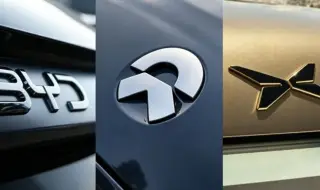
European buyers, attracted by the aggressive offensive of affordable electric cars from the East, began to abruptly wake up from their rosy sleep. At first glance, the deal seemed flawless - richly equipped technological toys, attractive design and extremely tempting leasing schemes. However, the reality of the secondary market in Europe quickly cooled enthusiasm, turning these vehicles into a real financial black hole. The big stumbling block turned out to be the catastrophically rapid depreciation of Asian models, which are losing value at an alarming rate.
Data from the authoritative German car valuation company DAT, cited by Carscoops, hit enthusiasts very hard. Research shows that Chinese electric cars and Plug-in hybrids depreciate about twice as fast compared to the average levels for the European automotive industry. This trend not only refuses to stop, but also intensifies with each passing month, turning into a real nightmare for private owners trying to sell their cars, as well as for large leasing companies that at the end of the contracts receive assets back for next to nothing.
Industry experts point out that for lasting success on the Old Continent, it is far from enough to simply assemble a decent car on paper. German analyst Martin Weiss from DAT emphasized the fact that the lack of a dense dealer network, the chronic shortage of spare parts, cumbersome service support and the uncertainty whether a given brand will even exist in Europe in five years are scaring off second-hand buyers. It is precisely this distrust that makes consumers in the secondary market run away from these vehicles like the plague, unless their price is literally lowered to the bottom.
The general picture of the battery car market also adds fuel to the fire. A study by the Indicata agency, cited by the Financial Times, reveals brutal statistics - in the UK, an average three-year-old electric car has retained only 38% of its original price, while in Germany, France and Spain this percentage is around a modest 46%. Against this background, traditional gasoline cars look like a real golden haven, retaining about 45% of their value in the UK after three years of operation, while classic hybrids lead the parade with as much as 51%.
One of the main culprits for this market collapse are the manufacturers themselves, who got involved in ruthless price wars in order to quickly grab market share and satisfy environmental quotas. When a brand new crossover is constantly offered with huge factory discounts, bonuses and government subsidies, the price of one- and two-year-old used units seems illogically high and their sale becomes impossible without a brutal price reduction. This phenomenon is clearly visible in most Chinese brands, whose models top the sales charts in various European countries thanks to their aggressively low start, but at the expense of their future residual value.
Last but not least, rapid technological obsolescence plays a very bad joke on current owners. Pressure from Asian headquarters leads to the fact that models are updated every few months - more powerful processors, more efficient batteries and smarter driving assistants are released. And while for new car buyers this means access to top technology for little money, for the person who decided to change his car after three years, this is a financial blow. His until recently technological flagship suddenly turns out to be a morally obsolete dinosaur, for which no one in the used car market is ready to shell out a serious amount of money.