European car giants are standing up to Brussels, sensing a real threat to the survival of the most affordable models on the market. In an attempt to save the budget segment from the bureaucratic guillotine, Volkswagen, Renault and Stellantis have joined forces in an unexpected coalition, demanding an urgent revision of the strict rules for localization of production that are being prepared. The three leading concerns warn that the European Union's overly conservative approach could literally liquidate cheap cars, depriving the mass buyer of the opportunity to acquire a new affordable car.
At the epicenter of the looming storm is the new Law on Accelerating the Development of European Industry. On paper, Brussels' ambitions seem logical - stimulating local production and sharply reducing dependence on foreign supplies. However, the reality in the sector has long been completely different, and the modern automotive industry has long since crossed the borders of the Old Continent. Today, global supply chains are so intertwined that even iconic French and German models rely on powerful support outside the union to maintain competitive prices.
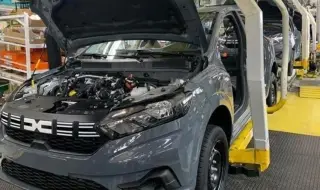
It turns out that the lifeline for the European consumer's wallet is currently being forged in Morocco and Turkey. The North African country has become a strategic bastion for Renault and Stellantis, where hundreds of thousands of vehicles are assembled annually, including market bestsellers such as the Dacia Sandero and mass-market city vehicles such as the Peugeot 208. In turn, Turkey acts as a real industrial locomotive, churning out huge volumes for brands such as Renault, Toyota, Hyundai and Ford. It is enough to look at the statistics - last year alone, about 750,000 cars from Turkish factories were shipped to EU markets. Without this key outsourcing, the production of base models in Western Europe would become economically absurd due to the dizzying costs of labor and energy.
To avoid the price shock, Volkswagen, Renault and Stellantis have put an alternative and much more flexible proposal on the table. Their thesis is simple: the essence of a car is not determined by where the last bolt is tightened, but by where the added value is generated. According to their formula, a car should be recognized as a European product if at least 70% of its value is formed within the pact. This covers everything - from the initial engineering, development and design, to the manufacture of complex components and powertrains on home soil.
Well, the game of nerves between the car industry and European regulators is just entering its decisive phase. The final decision and the final text of the regulation will not see the light of day before the second half of 2027. Until then, officials in Brussels will have to walk a very thin line - both to protect regional economic interests and not to inflame the prices of small city cars, which are already becoming a luxury for the average buyer.