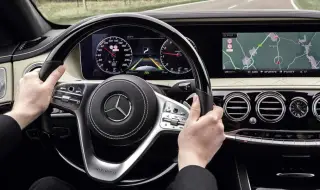
Buying a new car today is increasingly reminiscent of acquiring a supercomputer on wheels, but the real behavior of drivers behind the wheel reveals a completely different picture. An extensive study by the British sociological agency Censuswide, commissioned by a large dealer network, shows a serious gap between the technological equipment of modern vehicles and the habits of the people who drive them. The financial expression of this phenomenon is categorical - one in five vehicle owners pays money for systems that they practically never put into operation.
Instead of making everyday life easier, some digital assistants cause frank irritation among drivers. Data show that over 25% of respondents absolutely never take advantage of the capabilities of adaptive cruise control. Even more alarming are the safety statistics, where over a fifth of drivers consciously deactivate or ignore automatic braking systems in case of danger. Almost 18% of the survey participants categorically refuse to use the lane keeping function. The main reason behind these decisions is the subjective feeling of excessive electronic intervention in driving, with a significant number of drivers coming to the conclusion that smart assistants sometimes create more risks and tension than real benefit on the road.
The situation is similar with innovative visualization and dynamics solutions. At least a third of car owners equipped with head-up displays prefer to keep the projection on the windshield turned off, and 7 percent of them honestly admit that they have no idea how to activate it. The selector for changing driving modes also remains in the background - only 27% of drivers actively choose between sporty, economical or comfortable settings according to the situation.
Against this background, analog habits and practicality continue to dominate everyday life. Data published by Carscoops shows that good old Bluetooth connectivity retains its position as the most sought-after and regularly used feature in the interior. Depending on the age group, between 49.7% and 68.8% of respondents rely on it on a daily basis. The top three most useful technologies are completed by the reversing camera and the integration of satellite navigation - systems whose added value is unconditional and easy to perceive by anyone behind the wheel.