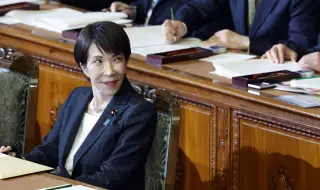
Prime Minister Sanae Takaichi announced that the country will release private oil reserves for 15 days, followed by government reserves for one month, without waiting for a decision agreed with the International Energy Agency.
This will be the first time Japan has released its national oil reserves individually, rather than through international coordination, since it began stockpiling oil in 1978.
Japan's dependence on the Middle East for crude oil is “considerably high” compared to other countries, and imports are expected to "decrease significantly later this month or later," requiring measures to prevent disruptions in supplies of gasoline and other petroleum products, Takaichi said.
Referring to the possibility that the average domestic retail price of gasoline could exceed 200 yen ($1.26) per liter, the prime minister also said he intends to maintain the price around 170 yen using government funds, Kyodo reported.
According to the Industry Ministry, gasoline prices fell to 154.70 yen in mid-January and rose to 161.80 yen per liter this week.
“We will flexibly review support measures to ensure continued assistance to the public even if the situation in the Middle East worsens. "It's worth noting that Japan imports over 90% of its oil from the Middle East, making it extremely vulnerable to the effective closure of the Strait of Hormuz, which has prevented the transport of oil and gas from Persian Gulf suppliers since the US and Israel attacked Iran late last month. As of the end of December, Japan's oil reserves stood at 470 million barrels, equivalent to 254 days of domestic consumption, of which 146 days are state-owned, 101 days are privately owned, and the rest is shared with oil-producing countries.