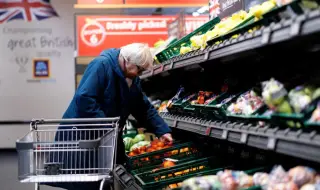
Undoubtedly, in recent years, inflation in our country has caused a desire to compare the prices of basic food products in Bulgaria with those in a number of European countries. The Internet is full of photos of how the same product from the same company with the same weight is cheaper, for example, in a German supermarket from a large food chain than in our country. Comparisons are made with dairy products, fruits and vegetables, meat and fish.
The increase in the price of fuel and fertilizers and the complex geopolitical situation are most often cited as the main reasons for the higher prices of basic food products in our country compared to those in a number of European countries. Where is the truth? Yes, fuel has become more expensive and led to a rise in prices, but it was the same for both Bulgaria and the whole of Europe. The difference comes from other factors.
First of all, incomes. In Bulgaria, they are significantly lower than those in Europe. And when we add to this the higher inflation, the feeling of a significant price increase is even stronger.
„Inflation in the euro area is around 3 - 3.2%, while in Bulgaria the harmonized annual inflation as of May 2026 reaches 6.3%. Only Romania is ahead of Bulgaria in this indicator. In food, alcoholic beverages and tobacco products, inflation in the euro area in April and May was around 3.3%, and in some basic processed foods, including cheese, yellow cheese and bread, the growth was around 1.1%. At the same time, overall inflation in Bulgaria remains high mainly due to the increase in the price of services“, explains Milena Dragiyska, manager of one of the large food chains in our country.
Yes - the average salary has also increased significantly. For the period 2021-2026. it increased by 88%. This creates additional consumption, which also affects inflationary processes.
„It is also important to note that until 15 years ago, over 40% of a household's income went to food and beverages. Today, this share is below 30% and will continue to decrease”, explained Dragiiska.
>
>>
VAT is another significant factor which has an influence on prices in our country being higher than those in Western Europe. In Bulgaria it is 20%, while in Ireland, for example, it is 7%. This automatically results in a 13% increase in price.
Most often we make a comparison with Germany. The food chain has made calculations based on 21 products from the small consumer basket. It can be seen that they are 23% cheaper in our country compared to Germany before being taxed with VAT. After taxation, they are again cheaper in Bulgaria, but by only 14%. That is, a difference of 9% is obtained, which is not small at all. “The myth has been broken and the EU statistics show it - Bulgaria has some of the lowest prices“, said Dragomir Iliev, manager of “Goods Supply” in the food chain.
>
>
The third factor is import dependence. The food chain in question imports about 80% of some raw materials that are in short supply. “When there is a lack of domestic raw materials, it means that we have to import foreign inflation“, said Dragiyska and added: “There are good producers. The point is that there are too few of them compared to the total consumption in the country“.
It is precisely because of the fact that the Bulgarian food market is critically dependent on imports that the company proposes that the state, traders and producers unite in creating a Food Sovereignty Park. In it, all interested parties will have assigned tasks with terms. The proposal has already been discussed with the Minister of Agriculture and Food and is expected to be presented to the authorities.