Turkey will need investments of around $200 billion by 2035 to meet its energy transition goals, including expanding renewable capacity, developing nuclear energy and modernizing electricity infrastructure.
This is according to the “Energy Sector Report 2026“, prepared by the Turkish Presidential Investment and Finance Office in collaboration with the consulting company APLUS Enerji. The document outlines the main investment opportunities and capital requirements in the energy sector over the next decade.
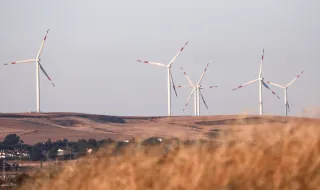
One of Ankara's key goals is to reach 120 GW of total installed capacity of solar and wind power plants by 2035. To achieve this, an average of about 8-9 GW of new capacity will need to be added annually in the coming years.
By the end of July 2026, Turkey's total installed electricity capacity had already reached 126.5 GW. Solar energy accounts for 21.7% of it, and wind energy - 12.1%, according to current data from the Ministry of Energy and Natural Resources.
The report estimates the total financing needs for the energy transition, including nuclear projects, at approximately $200 billion. A significant portion of future investments will be directed towards the electricity transmission and distribution grid, system flexibility, and the infrastructure needed to integrate more renewable capacity.
The official Turkish renewable energy roadmap envisages around $80 billion in investments to increase solar and wind capacity to 120 GW, as well as approximately $28 billion for new transmission infrastructure. The plans include around 14,700 km of high-voltage direct current lines, approximately 15,000 km of new alternating current lines and dozens of converter stations.
Batteries and electric vehicles are becoming a new investment sector
Along with solar and wind farms, energy storage systems are increasingly taking up a prominent place in the strategy.
The Presidential Investment Office says that Turkey already has a portfolio of around 33 GW of solar and wind power projects combined with batteries that are in the pre-licensing stage. This is one of the largest such project portfolios in Europe.
Another new sector for investment will be the infrastructure for electric vehicles. According to an accelerated growth scenario based on data from the Turkish energy regulator EPDK, the number of electric vehicles in the country could reach around 7 million by 2035. This will require a significant expansion of the charging network and electricity distribution infrastructure.
Turkey is also betting on offshore wind energy
Ankara also plans to develop a sector that has so far been almost absent from the national energy mix - offshore wind energy.
The goal is for the country to have around 5 GW of offshore wind farm capacity by 2035. Among the projects is the YEKA DÜRES-2026 initiative, defined as Turkey's first major offshore wind energy program.
Turkey is also continuing the construction of its first nuclear power plant “Akkuyu“, whose planned capacity is 4.8 GW. Nuclear power is included in the broader investment estimates for the energy transition until 2035.
Electricity consumption will continue to grow
The need for new capacity is also linked to the expected strong growth in consumption.
According to Turkey's National Energy Plan, electricity demand should reach 455.3 TWh in 2030 and 510.5 TWh in 2035. In comparison, in 2025, consumption was 360.9 TWh.
Ankara sees the electrification of transport, industry and buildings as one of the main tools to reduce dependence on imported fossil fuels and achieve the goal of net zero emissions by 2053.
Energy Minister Alparslan Bayraktar has already officially confirmed the investment ambition of around $200 billion by 2035, presenting Turkey's strategy to international investors in London.
For the government, the investment plan also has an economic dimension. In addition to new production facilities, Turkey is seeking to attract foreign capital, technology and production of renewable energy equipment, batteries and electrical infrastructure.
The President of the Turkish Investment and Finance Authority, Ahmet Burak Dağlıoğlu, pointed out that the rapid development of renewable energy, modernization of the electricity grid, energy efficiency and energy storage create significant opportunities for international investors.