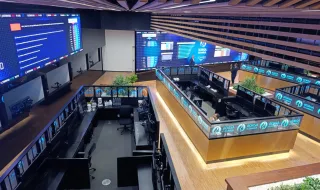
An investigation into alleged manipulation of investment funds in Turkey has expanded to the management of Borsa Istanbul after the exchange’s chief executive, Korkmaz Enes Ergun, was detained. According to Turkish authorities, he is being investigated for alleged membership in a criminal organization and bribery. The Board of Directors appointed his longtime deputy, Atilla Tureli, as acting chief executive.
As of November 2, 120 people had been detained in connection with the case, including company executives and fund managers. The investigation is being conducted by the Istanbul Chief Public Prosecutor’s Office and is focused on transactions in which, according to the charges, low-liquidity stocks were manipulated. Authorities are also examining whether coordinated operations were used to generate illegal profits.
Crisis began with inability to process redemptions
The case erupted in early September, when several investment funds announced that they could not process investors’ requests to redeem their units on time. The reason was a combination of mass sell-offs in the financial markets and difficulties liquidating assets.
Turkey’s Capital Markets Board suspended the operations of 131 funds managed by seven companies and ordered their liquidation. They have 455,758 individual investors, while the assets under management are estimated at around $18 billion.
Among those under investigation is former Deputy Minister of Agriculture Mustafa Aksu. Turkish Justice Minister Akin Gurlek said earlier that arrests, searches, warrants and asset-freezing measures had been carried out against suspects in the case.
Resignations and political repercussions
The scandal also affected the ruling Justice and Development Party. Fatma Betul Sayan Kaya resigned as deputy chair of the party and left it after claims emerged that her family had made profits of around 2 billion Turkish lira over five months, including through trades in shares of a company linked to the investigation.
Upon her resignation, Sayan Kaya said she was doing so in order to “not harm the AK Party and to ensure the case is fully clarified.” She and her husband were questioned as suspects, but the allegations against them remain subject to proof as part of the investigation.
In October, Capital Markets Board Chairman Mahmut Sutcü also resigned. Deputy Minister of Treasury and Finance Osman Celik requested immediate retirement. President Recep Tayyip Erdogan convened a meeting with his economic advisers and the heads of financial institutions, after which a coordination council was established under the supervision of Vice President Cevdet Yilmaz.
BIST 100 loses more than a quarter of its value
The stock market crisis affected Turkey’s benchmark BIST 100 index. On October 30, it closed at 10,759.56 points after a daily decline of 3.64%. Compared with September 11, the decrease was 25.63%. The index’s value was also confirmed by market quotations at the close of the trading session.
According to an analysis by “Ekonomim”, the market value of listed companies fell from 20.03 trillion Turkish lira on September 15 to 13.63 trillion lira on October 30. This represents a decline of 6.4 trillion lira, or around €114 billion.
In October, shares rose at only 68 of the 628 companies monitored. Losers included the Migros chain, whose shares fell by 18.04%, and Turkish Airlines, which declined by 14.49%. BIST 30 and BIST Tum also ended the period significantly below their September 11 levels.
Recovery of funds
Thirty-seven individuals have returned more than 18 billion Turkish lira, or nearly €327 million, as part of the investigation. The funds are linked to alleged illegal profits that authorities are attempting to trace and recover.
At the end of October, the Turkish Parliament passed a special law regulating the collection of losses and damages from those responsible and the payment of recovered funds to holders of units in the liquidated funds. Turkish authorities said the losses would not be covered by the state budget, but through the funds’ assets and the sums recovered.
Economist Mahfi Egilmez warned that the crisis could affect not only the funds directly under investigation, but also confidence in the capital market, bank deposits and the foreign exchange market. The next stage will depend on the sale of assets, the recovery of funds and the outcome of the legal proceedings.
Sources: bta.bg, hurriyetdailynews.com, anadoluajansi.gov.tr