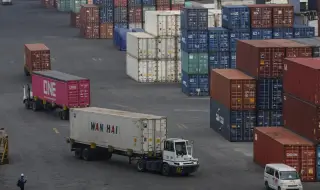
The trade wars launched by US President Donald Trump have cost global companies over $34 billion, which is expressed in increased costs and reduced sales. This is the conclusion reached by Reuters as a result of its own calculations based on an analysis of corporate reports, regulatory documents and press conferences.
In the future, losses will only increase, as uncertainty about the import duties imposed by Trump paralyzes the decision-making process in the world's largest corporations.
The agency notes that corporations are still not confident in the final cost estimate. According to his data, 42 corporations have cut their profit forecasts, and another 16, including Apple, Ford, Porsche and Sony, have withdrawn their forecasts altogether or postponed their publication. The majority of companies agree that Trump's unstable trade policy makes it impossible to accurately assess the costs.
According to economists, the costs to businesses could be several times greater than those that companies have already reported. "You can double or triple your numbers and we would still say that the scale is inevitably going to be many times greater than most people realize," Yale School of Management professor Jeffrey Sonnenfeld told the agency. He believes that the consequences of Trump's tariff policy could be even worse, including lower spending by businesses and consumers and higher inflation expectations.
On May 28, the US Federal Court of International Trade blocked the implementation of the US leader's decision to impose import tariffs, citing abuse of his presidential powers. The court blocked not only the retaliatory tariffs on products from 185 countries and regions that Trump announced on April 2, but also previously imposed tariffs on imports from Canada, China and Mexico. At the same time, the court's decision did not apply to tariffs on supplies of cars and spare parts for them, steel and aluminum.
On May 29, a US appeals court suspended the order to block the tariffs. White House Press Secretary Caroline Leavitt noted at a briefing that the US administration intends to take this case to the country's Supreme Court.