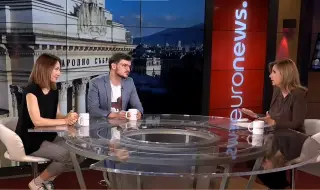
How will Rumen Radev's party govern, which people will he rely on in the new cabinet? Pepi Dimitrova - communications expert and Atanas Radev - political scientist are guests on the air of “Good Morning, Europe“ on “Euronews Bulgaria”.
“Society is extremely tired and life has become really very expensive“, Pepi Dimitrova emphasized, but called “to give time“ to the authorities to show real actions. According to her, the composition of the cabinet will be a key indicator, because “through the ministers we will be able to largely guess the policies“.
Atanas Radev also emphasized the importance of the first steps of the government. “The credit of trust is exhausted naturally“, he warned and emphasized that it is “crucially important in the first days of the cabinet to make it clear what these reforms will be“. According to him, the lack of clarity about the composition and priorities raises questions, especially in the context of expectations for stability.
There have always been coalition governments in Bulgarian politics. In this line of thought, we are not used to this type of intra-party negotiations to form a government, simply because the society remains uninformed about what is happening. The big question is what the three things this government will do first will be.
The main test for the government is economic policy. “The first thing we will see is the budget“, Radev said, adding that changes in the rules, including public procurement, will also be of key importance.
At the same time, Dimitrova noted that “no one who succeeds will change their tactics“, referring to the style of governance, but stressed that society's patience is not infinite and expectations for real results remain high.
My expectation is that we will see a balance of power, i.e. we will see people who are more oriented towards Russia, but we will also see those who are strongly oriented towards the European Union. I expect the government to show the same palette of people who will be liked by the different groups, as we saw in their behavior in the campaign.
I find this silence at the moment to be healthy, because think about it as a society whether we gained anything from negotiations in the mall in front of everyone's eyes. Back when we wanted to have open communication and to know everything. That's why there is representative democracy.
Society chooses who will represent it and must give carte blanche to those who represent it to make their decisions and present them.
The parliamentary logic for creating a government is radically different. Parliamentary logic requires that we be familiar with who the people in the leading sectors are, who the people will be who will be responsible for sectors in the parliamentary committees, because, ultimately, representative democracy and the logic of parliamentary government presuppose this type of transparency.