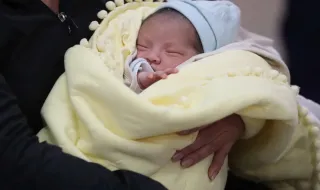
Nearly 800 children are registered in the National Register for Full Adoption, while the approved candidate adopters are over 1,500. At the same time, nearly 4,500 children are placed in foster families or residential care centers and are waiting to be registered in the register.
Most of the children already on the register are over 5 years old. Some of them are siblings who should not be separated, while others have health problems. As the age increases, the possibilities for adoption in Bulgaria also decrease.
Until they are registered in the register, reintegration measures are being worked on with the children and their biological parents. In some cases, these procedures take years. According to experts, the most common reason for the unsuccessful return of children to their biological family is poverty.
According to her, the long wait reduces the children's chances, including subsequent entry in the register for international adoption. The assessment of the duration of the reintegration work is made by social workers, with each case considered individually.
Approval of candidates takes three months
The procedure for assessing candidate adoptive parents lasts three months and includes a training course. At the Complex for Social Services for Children and Families in Plovdiv, prospective parents undergo a five-day training with the participation of psychologists, doctors and social workers.
The permit for entry into the register is valid for two years. For comparison, the study of prospective adoptive parents lasts nine months in Italy and Sweden and one year in France. However, experts point out that in other European countries there are more opportunities for support for adoptive parents and adopted children.
Nedka Petrova, director of the complex in Plovdiv, says that sometimes up to two years pass before the first proposal for a child or the first meeting. According to her, additional support is needed for families before the adoption, during the procedure and after it.
Psychological support after the adoption
Yordanka Terzieva waited about five or six years before adopting a boy who was then almost 3 years old and was being raised in a family-type placement center. The child has used psychological support, has developed an interest in singing and is already playing the piano.
Psychologist Miglena Mihtarska explains that the trauma of rejection can manifest itself years later, including during puberty, through distancing and not accepting the rules. According to her, the child sometimes provokes his relatives to check whether he will be rejected again.
Against this background, specialists report an increase in adoptions. The so-called hidden adoptions, in which the child is removed from his adoptive family and placed in a residential care center for a long time, are also increasing.
Sources: BNT