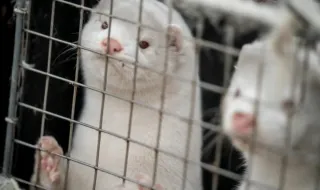
The bill banning fur farms is going to a second reading by the Committee on Agriculture, Food and Forestry. The meeting is scheduled for 3:00 p.m., and the committee’s final decision will determine whether the text will be submitted for a vote in the plenary chamber.
The amendments are set out in the Veterinary Medical Activities Act and provide for a ban on the raising, breeding and killing of animals for the purpose of obtaining fur. The scope includes mink, foxes, chinchillas, raccoon dogs and other animals raised solely for their fur.
The proposal was submitted on October 1 by Anton Kutev and a group of members of parliament from all parliamentary groups. On October 8, the Agriculture Committee supported it at first reading with 19 votes “for”, with no votes “against” or “abstaining”. A week later, the National Assembly approved the bill with 163 votes “for”, also without a single vote “against” or “abstaining”.
What the text provides
The bill defines the raising, breeding and killing of animals for fur as an act of cruelty to animals. The ban will not apply to fur obtained as a by-product from animals raised for meat or other food purposes. An exception is also provided for fur from animals taken during legal hunting.
In the event of a violation, individuals will be subject to a fine of between €800 and €1,500, and in the event of a repeat violation, between €2,000 and €6,000. Sole traders and legal entities will face property sanctions ranging from €2,500 to €4,500, which may reach €10,000 in the event of a repeat violation.
The last farm closed in 2025
There are currently no operating fur farms in the country. The last such facility, located near the Stara Zagora village of Madzherito, ceased operations at the beginning of 2025. The farm had a capacity of approximately 130,000 mink. The legislative ban aims to prevent this type of production from being re-established.
Yavor Gechev, chair of the Agriculture Committee, told bTV: “We have no differences between the various political formations and do not expect any proposals between the first and second readings—in other words, proposals to soften some of the provisions.”
After the vote in the committee, the bill must also be considered at second reading in the plenary chamber. The ban will become final after the law is adopted by the National Assembly and promulgated in the State Gazette.
Sources: bnrnews.bg, btvnovinite.bg