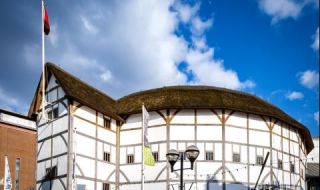
On June 29, 1613, the Globe Theatre in London burned to the ground. The incident occurred after a stage cannon unexpectedly exploded during a play and set fire to the roof of the theatre. After the fire, the Globe was restored to its original form only in 1997.
The theatre was founded in 1599. The construction of the building was entrusted to Peter Smith, a master of the class. He found and bought at a bargain price unique oak material for the "internal, decorative needs", which formed such acoustics that legends have long been circulating in theatrical London.
All spring, Smith's workers diligently build the most beautiful theatre that has ever appeared in London. The actors know what they want: a circular building resembling the globe and the letter “o”, entirely of wood, without nails or staples, with all the necessary rooms and premises that make Elizabethan drama a quick, intimate, rhetorical means of communication; a proscenium extending into the courtyard; a niche hidden behind the curtain, or a place intended for the study of roles; a terrace, or gallery above it - a gallery for the musicians; a marquee - a vault of heaven, partially covering the stage; a convenient basement and a hatch.
Everyone is eagerly awaiting the moment when the emblematic flag of the theatre will be solemnly raised: Hercules with the globe on his shoulders. The motto is chosen simply and symbolically: “Totus mundus agit histrionem” („All the World's a Stage”).
However, in 1613, during the performance of „Henry VIII” the theater cannon, which according to the script should explode ominously and majestically, was damaged. Its sparks ignited several beams, and then the straw with which the canopy over the stage was covered.
The beginning of the second part was laid in 1614, but the end came less than 30 years later. In 1642, the „Globe” Theater was destroyed by the Puritans. Its exact coordinates remained unknown for a long time, until in 1989 the remains of its foundations were found under the „Anchor Terrace” parking lot on Park Street.