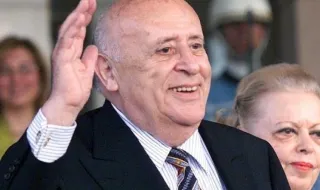
Süleyman Demirel entered Turkish politics as an engineer, but remains in history as one of the country's longest-serving statesmen. He was born in İslımköy, near Isparta, and graduated from Istanbul Technical University in 1949 with a degree in civil engineering. His professional career began in the state administration, where he worked on projects related to electrification, dams and irrigation.
In 1955, at the age of 30, Demirel was appointed Director General of the State Waters of Turkey. This position made him a recognizable name at a time when large infrastructure projects were presented as the engine of the country's modernization. His political career began in the Justice Party, whose leader he became in 1964.
Seven times at the head of a Turkish government
In 1965, Demirel became Prime Minister for the first time. In the following years, he formed a total of seven governments, and his political career went through coalitions, economic crises, sharp opposition between left and right forces, and military interventions in political life.
After the military coup on September 12, 1980, he was removed from power and was banned from participating in politics for seven years. After the ban was lifted in 1987, Demirel returned to the leadership of the True Path Party, and in 1991 he again assumed the post of Prime Minister.
On May 16, 1993, the Grand National Assembly elected him as the ninth President of Turkey. Demirel remained in office until May 16, 2000, and died on June 17, 2015.
The Story of Naim Süleymanoğlu
Demirel's name is often associated with Naim Süleymanoğlu, the weightlifter born in Pticar near Momçilgrad, who left Bulgaria in 1986 and continued his career in Turkey.
At that time, Demirel was the leader of the opposition, and Turgut Özal was the Prime Minister. It was Özal's government that organized Naim's return to Turkey after the World Championships in Melbourne. Özal's son, Ahmet, later stated: “Naim was the spiritual son of my late father, and I was his spiritual brother.“
Naim Süleymanoğlu won three Olympic titles for Turkey, became a multiple world and European champion, and set dozens of world records. In Turkey, he was nicknamed “Pocket Hercules“, and his story became a symbol of both sporting success and the fate of Bulgarian Turks in the 1980s.
Demirel himself remains in political memory with his characteristic pragmatic style and the phrase: “Yesterday is yesterday, today is today.“ It became a short expression of his political ability to change positions according to circumstances, but also one of the most recognizable sentences in contemporary Turkish politics.
Sources: dw.com, aa.com.tr, trthaber.com