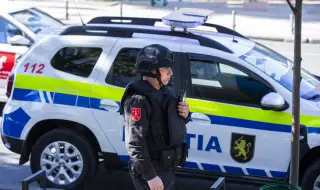
Thousands of people seek help from the organization La Strada, which has a small office in Chisinau, the capital of Moldova. Among them are those who have found themselves in a situation from which there is no escape. “We contact the police and discuss the next steps“, says legal advisor Tatiana Fomina. “In emergency cases, providing safe shelter, as well as psychological and medical support.“
Human trafficking remains a huge problem
"The"Hotline" against human trafficking is one of La Strada's many tasks. Trafficking can take many forms - victims are sometimes forced to work against their will, engage in prostitution, commit crimes or enter into forced marriages.
This phenomenon has been on the rise in recent years, with the UN estimating that more than 50 million people worldwide live in a situation that can be described as “modern slavery“. In Moldova, several hundred cases are officially registered each year. However, the real number is probably in the four digits, according to a 2019 study commissioned by the International Organization for Migration.
Abuse, labor exploitation, sexual violence
Tatiana Fomina has been fighting human trafficking for over 20 years. Who becomes a victim and why? “This criminal activity has changed a lot in recent years“, she says. At the beginning of the century, it was mainly about sexual exploitation. Moldovan women were taken or kidnapped abroad to work as prostitutes. Today, the vast majority of cases are for labor exploitation.
Most Moldovans are forced to work in France, Italy, and Germany. They often have their passports taken away, are forced to live in degrading conditions, and work much longer than they were supposed to for little or no pay.
For two years, Fomina has been observing a new phenomenon. “Twenty years ago, Moldova was a country from which people were trafficked. We could not imagine that Moldova would become a country that is a target for traffickers.“ But the fact that many Moldovans work in the European Union leads to a shortage of workers. And this shortage is mostly filled by people from Asia. In 2023, for the first time, a significant number of cases were registered in which foreigners became victims of exploitation in Moldova.
Immigrants are very endangered
La Strada knows of many similar cases. For example: over 50 people from Bangladesh and India arrived in Moldova after being promised jobs. People were forced to pay up to 5,000 euros for mediation. “They sold their apartments and houses to afford it. In Moldova, they had to hand over their passports and work in a garment factory that supplies goods to the European market. They did not receive pay for several months“, says Ina Buimestru, an expert at the organization. “People were told that they would earn well in the EU“, adds Tatiana Fomina. “And they did not know that Moldova is not part of the EU.“ Authorities and the non-governmental sector are monitoring the rise in such stories with concern.
The other risk factor is the war in Ukraine, which has seen around two million Ukrainians seek asylum in Moldova since 2022. Today, around 140,000 Ukrainians live in the country. “Over time, international support is decreasing. But the risk of human trafficking is increasing,” says Formina. She fears that the number of unsolved cases is high during this period, when the police and border guards are working at the limit of their capabilities.
Fomina recalls one striking case. Shortly after the war in Ukraine began, the organization received a call from the airport. A man was traveling with a Ukrainian woman to Istanbul, but the woman seemed inadequate. When La Strada experts arrived at the airport, the man had already disappeared, but the Ukrainian woman was still there. “She was under the influence of drugs. When she woke up the next day, she didn't remember anything.“ Fomina doesn't know exactly what the unknown man wanted from the young woman. He was never caught.
Prevention is key
“There is always inequality“, believes Tatyana Fomina. “If I was born into a good family, I probably wouldn't be a victim of human trafficking. But if I was born into a poor family with problems like alcoholism, domestic violence and unemployment, the situation looks completely different.“
Prevention is key, explains Ina Buimestru, which is why her organization's team tries to identify vulnerable groups and start a dialogue with them. She tells DW about her meeting with young men at a technical school. Many of them dream of working abroad, where the pay is much better than in Moldova. But they have no idea how to do it and what the risks are, Buimestru explains. "At first, they didn't believe I could teach them anything, but that quickly changed," she says. In her conversation with them, the expert draws attention to the importance of having a valid passport and visa, as well as being careful about fake job offers.
The authorities are not competent enough
GRETA, the Council of Europe's expert group on combating trafficking in human beings, has been urging the Moldovan government to do more to combat this problem for years. In particular, children from the Roma minority group, as well as minors living on the streets or in institutions, need to be better protected. That is why officials need to be better trained in how to recognize human trafficking. The lack of sufficient competence is also a problem, Tatiana Fomina confirms. “The police say that investigating these cases is too complicated and that is why they prefer to concentrate on other things.“
From 2020 to 2024, 935 cases of human trafficking were registered in Moldova - significantly fewer than in the previous four years. But according to GRETA experts, this is not a reason for joy. On the contrary: critics say that the decline is mainly due to “the reduction in the capacity of police authorities to combat human trafficking“. Because fewer registered cases do not mean fewer victims, says Tatyana Fomina.
Authors: Astrid Benjolken | Tobias Zuttmann