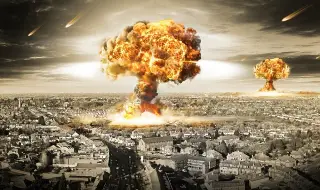
"The number of armed conflicts is at its highest level since World War II." That is the alarming conclusion of the latest report by the Council on Foreign Relations (CFR), an influential American think tank and publisher of the prestigious magazine Foreign Affairs.
For eighteen years, this organization has been assessing the risks that current and emerging hot spots around the world pose to the national interests of the United States - and, therefore, to its allies. Its goal is to alert U.S. officials to potential sources of short-term instability, but also to help them identify the most pressing emergencies.
The 620 experts surveyed (U.S. government officials and academics) ranked 30 global conflicts—some current, some potential—that are likely to have a significant impact on the United States in 2026.
In an interview with the French newspaper L'Express, Paul B. Stares, a conflict prevention expert at the Council on Foreign Relations (CFR), shares the main findings. A first observation: even if an agreement is reached between Kiev and Moscow, Vladimir Putin's Russia will remain a major threat, especially to Europe.
In addition, existing flashpoints (Ukraine, the Middle East, Venezuela, etc.) are likely to intensify. Other, more unexpected conflicts may also arise. The report mentions, for example, a scenario involving American strikes in Mexico.
Conflicts at the highest level, weakened international institutions, an American president capable of taking any direction... On paper, all the ingredients are there to make 2026 the most dangerous year for the world since the end of the Cold War or even since 1945. "The prospects are very worrying", warns Paul B. Stars, known for his measured tone.
L'EXPRESS: Reading your report, one realizes that geopolitical tensions, instead of easing, could worsen further in 2026...
PAUL B. STARS: Absolutely. In the course of our research, we identified thirty sources of instability and conflict that we consider likely. Some are already underway, others are potential, and we asked the experts we interviewed to rate their likelihood and impact (high, moderate, low).
We found that the level of anxiety and concern about the future and the prospects for new conflicts around the world has not decreased since last year. And there is little expectation of improvement in the coming year. Twenty-eight of the thirty scenarios considered are assessed as having a moderate or higher probability, which is one in two or more. That is a staggering figure.
Five of them (Gaza, the West Bank, Ukraine, Venezuela, and political violence in the United States) are considered both highly probable and high-impact conflicts, a level that has only been reached once before, last year. So, despite what President Trump may claim - that the world has turned upside down and become more peaceful as a result of his efforts - most experts in the United States do not consider this likely.
The prospects are deeply troubling, and we should all be concerned about the direction in which events are unfolding. The level of conflict seen this year has not been this high since the end of the Cold War or even since 1945.
L'EXPRESS: The report predicts an escalation of the war between Russia and Ukraine. And yet, in recent weeks, we have never been closer to a possible settlement of the conflict. Does this mean that you do not believe that the current negotiations will lead to a quick end to the conflict?
PAUL B. STARS: We developed the study in late October. At the time, the prospects for a ceasefire or a peace agreement seemed very fragile. The formulation of this scenario in the study therefore reflected the prevailing concerns at that time.
Shortly afterwards, a genuine attempt was made to resume ceasefire negotiations. At first glance, there are signs of progress, and some people I spoke to are cautiously optimistic about reaching an agreement. But at a deeper level, we need to ask how this can realistically be achieved.
Ukraine and Russia have fundamentally incompatible military goals. Moreover, some statements coming from Moscow in recent days do not encourage the prospects for an agreement. It is therefore possible to achieve a ceasefire without the underlying issues being truly resolved.
Trump will undoubtedly claim that this is a great triumph, and the fact that civilians are no longer dying and cities are no longer being bombed every night is certainly significant, but will this really mean the end of the war? Probably not.
L'EXPRESS: As for Russia, the report mentions a scenario classified as moderately likely but with high consequences: clashes between Moscow and one or more NATO member states, triggered by an increase in Russian provocations against certain European countries. What exactly does this mean?
PAUL B. STARS: This concern reflects what has been happening in Europe over the past twelve to eighteen months - a period during which Russia has conducted numerous so-called hybrid operations, also known as gray zone operations. This includes, but is not limited to, cyberattacks, disinformation campaigns, and maneuvers for political influence.
Suspicious activity has also been observed in connection with drone incursions, as well as incidents involving Russian aircraft in the Baltic region. Most experts believe that this is Putin’s way of testing NATO’s resolve, looking for weaknesses, and sowing division in Europe.
As you know, Europe seems relatively united in its support for Ukraine and NATO, but in times of crisis it can be difficult for Europeans to agree on a military response to Russian strikes. Most of these incidents have occurred in countries bordering Russia, but cases have also been observed in France, Denmark, and the United Kingdom.
The real risk is that Russia could make a mistake or someone could make a hasty decision in the midst of a crisis that could escalate the conflict on Russia’s border. This is a completely plausible scenario. And if the war in Ukraine ends but Russia is unhappy with the outcome, then these pressure tactics could intensify or at least continue against NATO.
L'EXPRESS: In Asia, the report warns of several worrying scenarios. Among those deemed to have a "moderate probability" (50%) and "high impact" are nuclear tests in North Korea and increased military, economic and political pressure from China on Taiwan.
PAUL B. STARS: North Korea has also moved up one spot in our report this year. There are concerns that Pyongyang could resume its provocations, including nuclear tests, which could increase tensions on the Korean Peninsula, provoking an armed confrontation involving other regional powers and even the United States.
But what worries me most is the possibility of conflict over Taiwan. This scenario is classified as having a moderate probability, but it seems to me the most dangerous. Because it is very likely to lead to a direct confrontation between China and the United States, which would have serious consequences for regional security and global stability.
It is not that we are on the verge of an immediate crisis - I share the opinion of the majority of respondents on this issue - but surprises do happen and this risk remains my most pressing concern for 2026.
L'EXPRESS: Despite the apparent calm, the report identifies the conflict in Gaza and the growing tension in the West Bank as the main challenges for 2026.
PAUL B. STARS: As for Gaza, it is clear that the level of fighting, deaths and destruction has decreased thanks to the ceasefire agreed at the beginning of the year. However, no reasonable observer would say that the conflict has been resolved. Rather, it seems to be in a state of stagnation.
Hamas is severely weakened, but no expert will tell you that the group has ceased to exist as a fighting force or a political player in Gaza. In my opinion, it is seeking to restore its influence and capabilities.
This conflict, in my opinion, is far from over, and many questions remain unanswered: How will the Gaza Strip be governed? Who will finance the reconstruction? Who will ensure security and order?
Without sustained attention and significant investment from all stakeholders, rebuilding Gaza will be extremely difficult.
As for the West Bank, it is actually the main problem identified in the 2026 report. The Israeli government recently approved a new series of settlements, and tensions have escalated in recent days. The coming year will be very difficult for the residents of the West Bank. I see no signs of improvement in the short term; quite the opposite.
L'EXPRESS: And what about the other conflicts in the Middle East?
PAUL B. STARS: One of the most worrying conflicts is the one between Israel and Iran. Most experts I listen to or talk to express very little confidence that this conflict is really over or that we will not see a resumption of Israeli strikes against Iran.
I wouldn’t be surprised if Tehran actively seeks to restore its nuclear program to its pre-strike level and also seeks to reactivate its network of allied groups in the region. Why else would it be? Therefore, resumption of strikes seems quite likely to me. The same applies to Lebanon.
As for Syria, the situation looks relatively more promising – which may seem counterintuitive, given that ISIS continues to carry out attacks on American interests there. But there are some glimmers of hope that indicate that the situation may improve and stabilize over time. However, the challenges facing the Syrian government remain enormous, and we should not have excessive illusions.
Finally, Yemen remains another source of concern. The country continues to suffer from violence, both domestically and internationally. I don't think we can be particularly confident that the situation will stabilize in the near future.
L'EXPRESS: The report also predicts "an escalation of US military operations against transnational criminal groups, leading to direct attacks on Venezuela and the destabilization of the Maduro government". Could this lead to the fall of the Venezuelan dictator?
PAUL B. STARS: For starters, the United States is already using military force against what it considers narco-terrorists operating from Venezuela. In recent days, they have also stepped up pressure on ships carrying oil to or from Venezuela, seizing two tankers. So where will this lead?
"The best" scenario, I think, would be for the pressure campaign to intensify and lead to Maduro's resignation, either because he is forced to leave or because he decides that it is in the best interest of Venezuela. But the likelihood is low to moderate, especially since in recent days China and Russia have issued statements expressing their support for Venezuela, in contrast to what the United States is doing. That would probably embolden Maduro. So I don't believe he will go easily.
The worst-case scenario would be for the United States to start striking military or even commercial targets. And we know that this kind of strike has bad results when it comes to regime change. And it would be irresponsible for the Trump administration to consider conducting military operations on Venezuelan soil to try to physically remove Maduro.
That would be complete madness, and most polls in the United States show opposition to any form of military intervention in Venezuela.
In my opinion, the most likely scenario is that the pressure will continue for a while, after which the United States will find a way to declare victory and the crisis will eventually subside.
Trump will say that he has achieved something - for example, that he has prevented the flow of drugs or illegal migration into the United States - he will declare himself the winner and everyone will go home. But this remains a very dangerous situation. And Trump is very unpredictable and unstable. If his pride is tested, no one can say where this could lead.
L'EXPRESS: What do you think are the Trump administration's real motives in Venezuela?
PAUL B. STARS: These actions are part of a broader dynamic in which the United States seeks to assert its influence throughout the region. Let's not forget that Venezuela also has the largest reserves of crude oil in the world.
Trump has a very mercantilist view of the importance of these resources - not only oil, but also rare earth minerals on a global scale - and this plays an important role in his calculation of US interests.
Greenland, for example, is seen as a country with significant deposits of rare earth minerals and as part of a future northern trade route that will open up in the coming decades.
So Trump perceives the world through the prism of very fundamental economic considerations. And this obviously plays a role in the case of Venezuela as well.
L'EXPRESS: The tension over Greenland is not among the thirty scenarios considered in the report. Yet Donald Trump continues to press, as evidenced by the recent appointment of Louisiana Governor Jeff Landry as a special envoy to "integrate Greenland into the United States".
PAUL B. STARS: Most people thought that all of this was over, that Trump had done his show, that he had started the negotiations, and that everything would die down. And many thought, "Given all the problems Trump is facing right now, Greenland is probably not going to come back up on the agenda."
But here we are. And again, it has become a source of irritation. But I don't think anyone is seriously considering the use of force by the United States to coerce or seize Greenland. However, I was amazed when I read the Louisiana governor's tweet about X.
This is an absolutely unthinkable statement, especially against a sovereign nation and especially an ally. This is another illustration of how, whatever good things the Trump administration achieves, they are immediately undermined by this kind of unnecessary, provocative and inflammatory actions that alienate allies and partners around the world.
However, when it comes to Greenland, I think this is Trump's way of keeping the Europeans on edge and distracting them.
L'EXPRESS: Even more surprising is that the report does not rule out the possibility of direct US strikes against criminal groups in Mexico, despite the seemingly friendly relations between Donald Trump and President Claudia Sheinbaum. What might the implications of such a scenario be for relations between the two countries?
PAUL B. STARS: This concern is directly related to the Trump administration’s broader efforts to combat what it calls drug traffickers, narco-terrorists, and drug cartels. Trump has made comments from time to time suggesting that if necessary, he would not hesitate to strike at the cartels in Mexico.
So if, for example, he succeeds in overthrowing Maduro through coercive action, he could say, “Well, it worked against Venezuela, why not against Mexico?” He harbors no particular animosity toward the Mexican government, so much as toward drug traffickers and the ongoing problem of illegal drugs entering the United States.
He knows that this issue is of great importance to the American public, and he even enjoys a degree of public support. Even if experts consider this scenario unlikely, it deserves attention, especially in light of what Trump is currently doing in Venezuela.
L'EXPRESS: A year after his return to the White House, what is your opinion of Donald Trump's foreign policy?
PAUL B. STARS: On the one hand, President Trump should be commended for his attempt to reach a peace agreement in Ukraine, and I believe his efforts may have had an effect in other parts of the world.
In my opinion, he deserves credit for this initiative. However, the results of these efforts are not as significant as he claims. He has claimed to have resolved eight conflicts around the world since he returned to the White House. But when we look at these eight cases more closely, the results fall far short of his claims.
Another positive outcome of this administration is that Europe is now much more motivated to increase its defense spending and take greater responsibility for its own security.
This is a recurring criticism of American administrations, and President Trump has certainly put Europeans under pressure, and they have responded. But it has come at a high price.
Many Europeans now doubt the level of support they would receive from the United States in the event of a crisis, and members of the Trump administration continue to make highly critical comments about the state of Europe. The national security strategy was quite provocative and of little benefit to transatlantic relations.
It is also worth noting that Trump addressed what was perceived as a clear lack of attention to the Western Hemisphere.
Many countries in our region felt that they were not getting the attention they deserved. However, this region is an important source of security and trade for the United States, among others. This has drawn more attention to what is happening there, especially the threat posed by drug trafficking and so on.
But again, this has come at a price. It has alienated Canada and Greenland. Mexico is also feeling the pressure. Overall, the international achievements of the Trump administration seem to me to be very contradictory.