Comment by Ivaylo Noizi Tsvetkov:
The tragedy in the Western Stara Planina Mountains caused such information sepsis in the public consciousness that one wonders whether this process is reversible - or in the fog of half-truths and outright lies we will have to cross our fingers for some kind of autotherapy and regeneration, after which the ugly scars of the torpedoed trust in the native social contract in Bulgaria will certainly remain.
Due to the scale, the understandable over-interest and the shameless speculations from both the public and the authorities, Petrokhan-Okolchitsa inflicts a collective trauma on the public consciousness, conditioned simultaneously by anxiety and frustration (Angst und Frust, for fans of classical German philosophy), and this in turn, as a cause, leads to several consequences. The first and most important seems to be the deep immersion in conspiratorialism, generously and clumsily fueled by the mistaken communication model of the authorities/institutions, which also results in the widening gap in trust between society and statehood.
In the fog of the "Petrohan" case
In the aforementioned fog, only one thing seems to be visible - that the attempt to emotionally cope with the tragedy in a normally constructed mind leads precisely to an increase in anxiety levels, as well as - as a kind of consequence - to its "stepsister" frustration. And we are not talking about ordinary fear, because fear usually has a clearly defined object; social anxiety can be far more devastating and destructive for our common Bulgarian "psyche", because it is an ongoing condition with no visible or tangible way out. It is somewhat similar to the rudimentary, atavistic and ingrained fear of the dark over millennia, in which the fear is generated by the fact that you do not know whether or what is there, and not by anything specific. Thus "Petrohan" becomes an existential quiet horror of this Bulgarian world, which is already experienced as hostile to the individual.
Who is to blame? Everyone - the authorities, the media, and the social media conspiracies of the public, in which a somewhat validated and easy explanation of complex cases and processes is always sought. Due to the gargantuan appetite for media content, everyone has already started chanting the chorus about the lack of trust in institutions, without anyone being able to explain that this distrust is not a cause, but a consequence of the combination of anxiety and frustration that is detrimental to common sense. The roots are also in the digital revolution with its exhibitionistic craving for display and "squareness", and in the pure communication incompetence of the authorities. Hopefully it is only communicational, because the latter, including the prosecutor's office and the State Agency for National Security, leave the impression that they are tragically behind the era they inhabit. And that under the inherited totalitarian reflex for the veil under which "investigations are being conducted" and "it's not your business to ask too many questions", they resemble something like alchemists, in whom the philosopher's stone of state-public communication fatefully slips away.
This mistaken model, in which disinformation also seems to be an official weapon of the authorities, does not simply lead to the erosion of the notorious trust and an increase in anxiety. It also leads to something, it seems to me, much more serious - I can illustrate it with something from the ancient Roman poetic genius Juvenal, namely "quis custodiet ipsos custodes”, or who will guard the guards themselves. However, with us, the satirical nuance of the original is lost and only the exposed nerve of the feeling that the guards have abandoned us in this increasingly hostile incomprehensible reality remains.
That is, today "Petrohan" shocks us with the six dead, tomorrow "who knows what can happen". And all this - generously garnished with furious politicization, in which representatives of the status quo try to cut the white flesh mainly of the opposition in the face of the PP-DB. The PP-DB themselves, by the way, also leave the impression of a communication disaster, because instead of limiting the damage, they manage to organize a small celebration for the hostile parties and media through the strategy of "but we didn't know". Without - I emphasize - any investigation having come up with any unambiguous evidence for all the monstrous accusations. Add to that the ideological touches, so well exploited in the battle for election dividends - that from all this semi-Buddhist-sectarian and what not mish-mash there is a whiff of something "dubious" liberal, of "well, that's what happens when we let them play the unicorn", ergo - in the end, liberal democracy is again to blame for everything. Without which - and this is almost Zeno's irony - no one would be able to argue anything against anything, especially on social networks so sacralized in the mass consciousness.
Fans of TV series are well aware of the "Nordic noir" style trend - Scandinavian "black" and dark crime cinema, a distant heir to titans of the last century such as Fritz Lang, Friedrich Murnau, Raymond Chandler and Dashiell Hammett. To the more developed imagination, "Petrohan" looks a lot like something like that - a winter landscape, leaden skies, a mountain sect armed to the teeth, including with drones, an ominous soundtrack, uncomfortable ignorance; all that is missing is a pair of brave and clever detectives for five to unravel this story. However, it seems to me that this is not "Nordic noir", but something like "Bulgarian gris", i.e. "Bulgarian gray" - our genre in reality itself, not in art, in which everything in public consciousness is blurred to almost complete obscurity, the boundary between reality and its mediatized version is blurred, and in the end there is neither Aristotelian catharsis nor devil. Because anxiety and frustration plus their illegitimate child - disbelief - make it so that whatever final version they come up with, the reaction will be of the type "yes, well, yes, they are hiding something".
The collective trauma of the catastrophic event
There is another side effect of the above, which no one is aware of, and it really leads imperceptibly to the aforementioned collective trauma. This is the peculiar "virtualization" of the dead bodies; they seem "somewhere out there", in the mountains unknown to the audience, distant and media-disembodied. And this has a catastrophic effect on the normal empathetic reaction, drowned in the overdose of fictional content, the rapid change in moods and the swinging towards one version or another.
The conclusion, roughly, is the following: we will live in growing anxiety, which will generate frustration as an unconscious response to our forced inability to know the truth and this will lead to a kind of collective psychological purification. And the residual feeling and even conviction is that they do not allow us to know - either because of the lack of integrity in power, which we as citizens should demand, or because of the aforementioned unprincipled politicization of the six-fold death. Before which, before demanding anything, we simply have to bow our heads and pray for the repose of their souls. Nothing like this is currently observed, because this is exactly how the collective trauma from the catastrophic event works; it also leads to a general feeling of a crisis of meaning and an imperceptible disintegration of community and collectivist culture, even without calling for help from Max Weber or Jung.
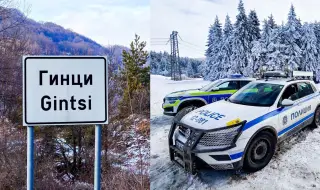
Actually, wait a minute. If you ask me, the matter is clear - it is about the treasure of the Valchan Voivoda, which contains a nail from the cross of Christ, long ago transferred by the Bilderbergs and buried in the land of the village of Gintsi. Someone told me so, whose third cousin is the aunt of a man from Montana, who in turn happens to be the brother-in-law of a man from the National Security Agency and is a bit of a Zen Buddhist.
But I can't reveal more, because investigative actions are underway...