Who supports Iran in the Middle East? How great is the danger of a prolonged war? And what is Moscow doing? Political analyst Cornelius Adebar answers these questions to the German public broadcaster ARD.
What can Iran use to oppose Israel and the US militarily?
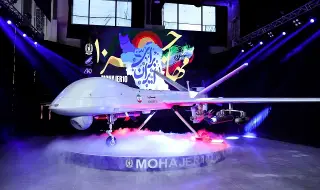
Cornelius Adebar: In recent months, after the war last summer, the Iranians have rebuilt their own arsenal of weapons, mainly medium-range missiles, but also drones, to prepare for such an eventuality. This means that we should expect ballistic missile attacks in particular. It is likely that Tehran used such weapons to launch retaliatory strikes in the region - whether on American military bases or on targets in Israel that were attacked.
Among Iran's allies, Hezbollah should be mentioned first and foremost. Or the Houthis in Yemen, who could seriously disrupt shipping. There are various scenarios that have also been considered and certainly taken into account. But when you start a war, the outcome is uncertain. We are not just talking about attacks and counterattacks, but about the fact that at some point its own dynamics develop.
Iran relies on militias from the Middle East
Iran was considered an important power in the Middle East for a long time, but recently it has lost its influence. Which countries still support the government in Tehran?
Adebar: In this sense, there are no longer any countries that are on Tehran's side. Syria was the last major state ally until the fall of Bashar al-Assad in December 2024. That is why Iran relies on these militias that are allied with Iran in the region, for example through religious ties - i.e. affiliation with Shiism or Iranian ideology.
It is about Iran being able and willing to defend itself beyond its own borders. This is, so to speak, the doctrine that prevails in Tehran. And for this in the past, militias were sufficient.
In recent years, Arab countries have undertaken a rapprochement with Iran. They have insisted, above all, in Washington that military intervention should not be allowed. Of course, they are not allies of Iran. But they are worried about the general situation in the region - for their own economic well-being - and that is why they have declared themselves against a military attack.
What will happen if the first American soldiers are killed?
Iran has launched retaliatory strikes against several American bases in the Middle East. How great is the danger that the situation there will escalate completely and lead to a large-scale conflict?
Adebar: The danger is real and US President Donald Trump has already warned about it. He said: “We don't know exactly what will happen. Of course, we have overall military superiority over Iran.“
During his first term, Trump ordered the assassination of an Iranian general, and the Iranian retaliatory strike did indeed hit an American base. His argument at the time for ending the exchange of strikes was that no American soldiers were killed, only wounded. The question is, what will happen if the first American soldiers or American civilian forces are killed? There is also pressure in the region on Trump to end this war. And we do not know how long this will last.
There is no danger of Russian intervention
What role does Moscow play in the overall situation? We know that Russia has repeatedly purchased Iranian drones.
Adebar: In recent years, we have observed increased cooperation between Russia and Iran, primarily in the conflict zone in Ukraine. Iran has massively supported the Russian side with its own drones. In recent weeks, a new military agreement was concluded between the two countries for the supply of anti-aircraft missiles to Iran. Of course, it is still too early to have any results. But this close cooperation is observed not only in the military field, but also when it comes to, for example, avoiding US sanctions.
So far, Russia has not intervened in the current conflict. But in general, it is difficult to argue with the law and the law, with international law, against, for example, the Russian aggressive war, since the Americans, for their part, also ignore international law. This blurs the overall picture even more.