What future awaits Iran now? Just a change of the supreme leader or deeper changes? And how big is the risk that the powerful Revolutionary Guard will take everything into its own hands? Experts' opinions.
The death of Ali Khamenei marks a historic turning point - not only for Iran, but also for the entire region. The 86-year-old spiritual and political leader was killed on Saturday in an air strike by the US and Israel against Tehran. The country's constitution provides for a committee of 88 Shiite clerics to decide who will be his successor. Possible candidates include former President Hassan Rouhani, the son of Ayatollah Khamenei - Mojtaba, who is believed to be close to the Revolutionary Guard, and Hassan Khomeini, the grandson of the republic's founder Ayatollah Ruhollah Khomeini, who ruled Iran until 1989.
Some names are also being mentioned in opposition circles, the most famous of which is that of Reza Pahlavi, the son of the Shah who was overthrown in 1979. However, the Iranian opposition is scattered and divided.
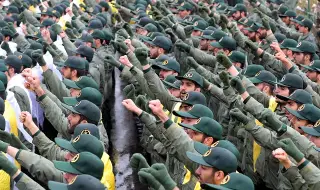
The country is now being temporarily run by a three-member committee consisting of the president, the head of the judiciary and a representative of the Guardian Council. But the real question is: will the changes be only personal or will the system be changed? The Revolutionary Guard plays a key role in this, and despite the assassination of its commander Mohammad Pakpour, it remains the central pillar of power.
Unprecedented assassination
For Bente Scheller of the “Heinrich Böll“ Foundation, Khamenei's death is “an event of great symbolic value“. The targeted assassination of a sitting head of state is unprecedented, and the circumstances surrounding his death add a new dimension to the situation, she points out.
US President Donald Trump has publicly called on the Revolutionary Guard to lay down its arms. For Hannah Foss, a Middle East expert at the Friedrich Ebert Foundation, this speaks to Trump's fundamental lack of understanding of the situation: "He really doesn't understand the logic of the Iranian regime and its security apparatus," Foss says, noting that the Revolutionary Guard has its own secret service, whose structures support militias at home and abroad.
Bente Scheller also considers the disarmament of these structures unrealistic: "I don't think the Revolutionary Guard would respond to such a call," she says. According to her, the leadership of this guard knows very well that in this way they would lose power, influence and significant economic benefits. "The apparatus is large and so far there have been no serious cases of desertions. Accordingly, the probability of a voluntary withdrawal is small“, points out the representative of the “Heinrich Böll“ Foundation.
What can be expected?
According to Scheller, this largely depends on Washington. Many things are in the realm of speculation. The decisive factor is “what Trump will be satisfied with“. It is possible that individual military strikes will continue, for example against the ballistic or nuclear program. Scheller fears further military action – and retaliatory Iranian strikes.
Foss believes that a structural change is possible within the country. The Revolutionary Guard is “an apparatus completely saturated with ideology, which at the same time functions as a paramilitary organization“. Despite the loss of their leader, the Revolutionary Guards are poised to play an even stronger role in the future of Iran. Iran could become even more militarized, with government institutions losing their importance – at the expense of the security forces.
Regime change unlikely
Both experts believe that regime change is unlikely at this time. Scheller believes that some reshuffle within the existing power apparatus is possible. “We are more likely to see a shake-up within this power apparatus than an opposition coming to power,” she says. The population has already shown courage, it does not need support from outside, but at the same time it has seen that international promises remain without consequences.
For example, if former President Rouhani succeeds Khamenei in office, this would mean “not a change of the system, but only a change of leadership“, says Foss. According to her, “the vast majority of the Iranian population“ wants fundamental change – through a referendum on the future form of government.
Limited political scope for action
Whether this Iranian wish will come true depends largely on the Revolutionary Guard. It controls not only the weapons but also the economy and ideology. Scheler warns that the continued bombing could shrink the political space: now is the time to stop and try for change while the shock is still fresh. "If we just keep bombing, we will miss this moment," she says.
Iran is at a crossroads - between symbolic change and fundamental change, between potential militarization and a referendum on the future. The path chosen will determine whether Khamenei's death will be more than just a change of leadership.