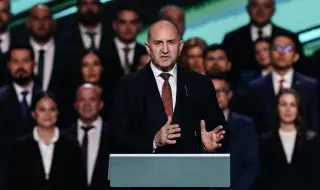
Former President Rumen Radev, a Russian “Trojan horse“, is likely to win the Bulgarian parliamentary elections, the Financial Times reported, citing sociologists.
“Knowing Radev's approach to Putin and Russia, there is a risk of forming a pro-Kremlin government at a critical moment – it would become Putin's Trojan horse in Europe”, MEP Valerie Heyer told the Financial Times. The publication noted that sociologists indicate that the former head of state's center-left political force will receive about 30%. Radev is closer to Russia than any other Bulgarian prime minister in recent memory, the newspaper writes.
As president, he has not criticized Russia's war in Ukraine, condemned EU sanctions and opposed his country's accession to the eurozone, the newspaper notes. "We are the only member state of the European Union that is both Slavic and Orthodox. "We can be a very important link in restoring relations with Russia," the Financial Times quoted Radev as saying in an interview. Meanwhile, local analysts doubt that Rumen Radev can become a second Viktor Orban, and he will have to soften his position.
Analysts interviewed by The Washington Post believe that if Radev's party wins, it will have to form a coalition with a more pro-Western faction. The newspaper, citing analysts, former diplomats and a European intelligence source, reported that they fear the "Kremlin hand" in promoting Radev's candidacy through social media. The Washington Post, citing former high-ranking Bulgarian government officials, wrote that Radev has long been oriented towards Moscow.
A European intelligence source claims that the former Bulgarian president's campaign has received support from former high-ranking Bulgarian military officers, "with ties to Russia". The Russian President's press secretary Dmitry Peskov told The Washington Post that the Kremlin had not heard from Bulgaria "any pragmatic statements or words about its readiness to solve problems through dialogue". This was his response to a question about whether Moscow hopes for a partnership with Radev and whether it is ready to support his candidacy.
Since 2020, Bulgaria has been in a state of prolonged political crisis, leading to a series of early parliamentary elections and frequent changes of government. Since 2021, the country has been governed mainly by technical cabinets formed on a non-partisan basis, the publication emphasizes.