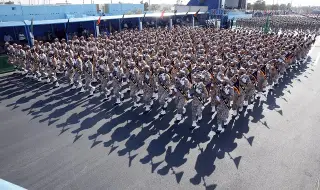
After two months of war with the United States and Israel, Iran no longer has a single undisputed spiritual leader at the top of the power pyramid. The sharp departure from tradition could harden Tehran's position as it considers new talks with Washington.
Since the Islamic Republic was founded in 1979, power has been concentrated in the hands of a supreme leader who has the final say on all state matters. But the assassination of Ayatollah Ali Khamenei on the first day of the war and the rise to power of his young son – Mojtaba, have created a new order dominated by commanders from the Islamic Revolutionary Guard Corps (IRGC) and lacking a decisive and authoritative balancer.
Mojtaba Khamenei remains at the helm of the system, but according to three well-informed sources, his role has largely been to legitimize decisions made by his generals rather than to issue orders based on decisions he himself has made.
The tensions that have built up during the war have concentrated power in a narrower, more hard-line inner circle linked to the Supreme National Security Council, the Supreme Leader’s office and the IRGC, which now dominate the execution of military strategy and key policy decisions, Iranian officials and analysts say.
"The Iranians are terribly slow to respond," said a representative of the Pakistani government regarding the peace talks between Iran and the US, in which Islamabad is the mediator.
"In all likelihood, there is not just one power center where decisions are made. "Sometimes it takes them 2 to 3 days to respond," he added.
Analysts point out that the obstacles to reaching an agreement are not due to internal conflicts in Tehran, but to the huge gap between what Washington is ready to offer and what the hard-line Revolutionary Guards are willing to accept.
In the negotiations with the United States, Iranian diplomacy is represented by Foreign Minister Abbas Araghchi, who was recently joined by Parliament Speaker Mohammad-Bagher Ghalibaf, a former IRGC commander, Tehran mayor and presidential candidate who has played the role of a link between Iran's political, military and spiritual elites since the beginning of the war.
However, the main Iranian negotiator on the ground is IRGC commander Ahmad Vahidi, according to two Iranian and one Pakistani officials, who identified him as a key figure weeks ago. from the Iranian side, including on the night the ceasefire agreement was announced.
Mojtaba, who was seriously injured at the start of the Israeli-American military operation that killed his father and other relatives and left him disfigured with serious wounds to his legs, has not appeared in public and communicates through advisers from the IRGC or limited audio links due to security concerns, two people close to him said.
There was no immediate comment from the Iranian Foreign Ministry. Iranian officials have previously denied internal disagreements over talks with the United States.
Real power lies with wartime rulers, sources say
Iran presented a new proposal to Washington on Monday that senior Iranian officials said would see phased talks, with Iran's nuclear program on hold until the war ends and disputes over shipping in the Persian Gulf are resolved.
Washington, on the other hand, has insisted that the nuclear issue be resolved from the start.
"Neither side wants to negotiate," said Alan Ayer, an Iran expert and former U.S. diplomat. He added that both sides believe time will weaken the adversary – Iran by blocking the Strait of Hormuz, and the US by economic pressure and blocking Iranian ports.
At this point, neither side can afford to back down, Ayer added. The GCC is wary of appearing weak to Washington, while President Donald Trump is under pressure from the upcoming US midterm elections in November and has little room to be flexible without taking political risks.
"Both sides would view flexibility as weakness," Ayer said.
This caution reflects not only the temporary tension but also the way in which power is exercised in Iran.
While Mojtaba is formally the supreme leader of the Islamic Republic, he is more of a figure who gives his approval than he rules, endorsing decisions reached thanks to institutional consensus rather than imposing his authority.
All power is believed to have passed to the unified wartime leadership, which is centered in the Supreme National Security Council.
"Important agreements probably go through him," said Iranian analyst Arash Azizi. "But in my opinion his authority is not above that of the Supreme National Security Council. How could he oppose those who are waging war?", Azizi points out.
Hard-line figures such as former nuclear negotiator Saeed Jalili and a group of radical Iranian lawmakers have drawn attention to themselves by using aggressive rhetoric during the war, but they lack the institutional clout to block individual decisions or influence the outcome of certain events.
Mojtaba owes his rise to power to the Revolutionary Guards, who turned away from the pragmatists and supported him as a reliable guardian of their hard-line views. The growing dominance of the IRGC, which was solidified during the war, is a sign of a more aggressive foreign policy and tougher repression at home, people familiar with the matter told Reuters.
Guided by the principles of revolutionary Islamism and a worldview that puts security first, the IRGC believes that the importance of its mission lies in preserving the foundations of the Islamic Republic domestically and in countering external threats internationally.
This approach, which is also adhered to by other hard-line representatives of the judicial and clerical institutions, prioritizes strict centralized control and resistance to Western pressure, especially when it comes to nuclear policy and Iran's role as a regional player.
The center of power is shifting from the clerics to defense circles, the sources noted. analysts
In practice, the ideology of the IRGC determines the shape of the strategy, with the making of major decisions entirely in their hands. According to those familiar with the situation, given the military situation in the country and the death of Ali Khamenei, there is no factor in the system that has enough power or influence to oppose them, even if it wants to.
The choice facing Iran's rulers is no longer between pursuing a moderate or a more hard-line policy, but between a hard-line policy and an even harder-line policy. Smaller factions may push for even more radical policies, but such impulses are kept in check by the Revolutionary Guards, Iranian sources say.
This shift is symptomatic of a serious shift in political strata and a shift in the system from clerical supremacy to the apparatus of power.
"The transition is from clerical authority to hard power," said Aaron David Miller, a former American negotiator.
"From clerical influence to IRGC influence. "This is how Iran is run," he concluded.
While there are differences of opinion within the system, the decision-making process is consolidated in the institutions of national defense, and Mojtaba plays the role of a central unifying figure rather than a person embodying the supreme leadership in the state, added Alex Vatanka, a senior fellow at the Middle East Institute.
Despite the constant military and economic pressure exerted by the United States and Israel, Iran shows no signs of disunity or capitulation after the nearly nine-week war.
According to Miller, there is also no evidence of fundamental contradictions in the system or significant opposition movements in the streets.
This cohesion suggests that the country's governance is in the hands of the KGIR and the security services, which seem to be not just executing, but giving the orders on how to wage the war. There is already a consensus within the regime on the strategic goals and objectives – avoiding full-scale war, preserving leverage, especially through the Strait of Hormuz, and Iran emerging from the conflict stronger politically, economically and militarily, Miller stressed.
Translation from English: Nikolay Dzhambazov, BTA