Is 11,163 euros a lot for a salary for a director of a state-owned company? The problem is not how much state managers in Bulgaria receive. The problem is that Bulgarian citizens do not know what they are paying for.
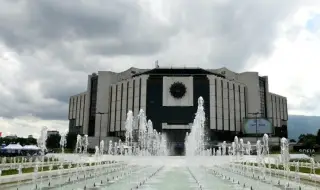
When the Ministry of Culture (MC) showed a document for a gross monthly remuneration of 11,163 euros to the director of the National Palace of Culture Andriyana Tatarova, she objected on bTV that in terms of remuneration of the boards, the National Palace of Culture is only in 22nd place out of a total of 216 state-owned enterprises. Tatarova showed a printout from her bank account, according to which 9,700 euros were received for the management of the National Palace of Culture in Sofia and the Festival and Congress Center in Varna.
Until 2023, when forming the salaries of managers of state-owned enterprises and companies, there was a ceiling of 18 minimum wages. This ceiling was removed by the Council of Ministers, which in February 2023 adopted hidden changes to the Regulations for the Implementation of the Law on Public Enterprises.
By what rules is the price for managing state assets determined today? And why are such huge amounts received for Bulgaria? The short answer is: non-transparent, non-market and administratively determined.
The long answer begins with the Regulations for the Implementation of the Public Enterprises Act and the score ratings provided therein, according to which the boards determine their remuneration.
What is the scheme?
In theory, the remuneration of the heads of state-owned enterprises is not formed arbitrarily. The Public Enterprises Act and its regulations bind them to the so-called score rating - a system of indicators by which the implementation of their business programs is assessed. The assessment may include revenues, investments, project implementation, quality of services and other specific objectives. Losses, which are the most direct measure of the effect of management, are also involved, but are only one of the indicators. The final result is a sum of points, determining the range of remuneration for board members and executive directors.
The public, which is the de facto owner of these public assets, does not see what indicators are set and how exactly the assessment has turned into a high sum - after both the National Palace of Culture, the Bulgarian Post, and many other state-owned enterprises reported losses of millions.
Citizens do not know what their real situation is. No authority has bothered to conduct an analysis, except to selectively extract scandalous facts about one or another remuneration. Just not to change the rules.
Citizens have no illusions as to why there is no change. Appointments to state-owned enterprises have long been part of the political resource of every authority. Doubts about competitions for managers further undermine trust. Thus, the information depends on the electoral turnout of newly arrived managers, and then everything goes on as before, including pay.
The Organization for Economic Cooperation and Development (OECD), which Bulgaria has been striving to become a member of for more than a decade, recommends that state-owned enterprises be subject to the same standards of accountability and publicity as listed companies.
Some of the heads of state-owned enterprises are required to declare their income and assets in the public register. However, these declarations do not reveal how their remuneration was formed and what results lie behind it, and it is not easy to find them. The public register shows how much they received, not why they received it.
In reality, state management in Bulgaria turns out to be quite free in forming its remuneration, since the main shareholder - the state - has given it great freedom and does not directly interfere in determining it. Without linking goals to results, it is impossible to determine whether the pay is fair.
Deutsche Welle has a report on the remuneration of the three-member board of directors of the Balneological Center "Kamena" EAD for 2025, whose principal is the Ministry of Health. According to it, the executive director A. B. received a gross salary of 198,047 leva (101,260 euros), and the other two members - 71,514 leva (nearly 36,565 euros). The report shows how much they received, but it does not tell us what results they achieved in return for what they received.
ADVERTISEMENT
Good practices
If Bulgarian taxpayers want to know how much the CEO of the debt-ridden "Bulgarian Post" receives, for example, they will have to wait until next year, when they will have filed an asset declaration for the previous year. Unless someone decides to announce it, as the former acting Minister of Transport and Communications, Korman Ismailov, did.
According to the information he provided in March 2026, the postmaster received over 7,600 euros per month, and the salaries of nearly 80% of employees, according to union data, are around the level of the minimum wage (620 euros). This is a company that exists thanks to state subsidies.
If the German taxpayer - and anyone else - wants to know how much the head of the state railway or any of the 8-member senior management receives, he opens the online annual report of Deutsche Bahn, finds the section on the remuneration of the management and supervisory boards and informs himself.
For the former chairman of the management board (CEO) Dr. Richard Lutz, the basic remuneration for 2024 - 1.42 million euros - and the bonuses - 700,000 euros - have been published separately, which makes a total of about 2.1 million euros.
The principles on which the remuneration system is based have also been published, as well as the relationship between the results achieved and the bonuses. There is also an archive of the reports.
This does not mean that state-owned companies in Germany are immune to mismanagement. Lutz was dismissed from his post in August 2025 after years of financial problems, train delays and pressure from the federal government.
Scandinavian diet for bg appetites
Last year, the Finnish government voted against a report on the remuneration of the CEO of NESTE, an oil and biofuels producer in which the state owns 44.2%. Not because the remuneration was secret, but because it considered it excessive.
The difference is significant. The dispute is based on public data, and the state acts as an informed shareholder, not as a casual observer.
Sweden, Norway and Finland have long chosen a different approach to the remuneration of state managers. Instead of limiting salaries administratively, they emphasize transparency and public accountability, comparable to the standards for listed companies. The public learns this information from company reports, not from political scandals.
In Bulgarian reports, personnel costs are common. If someone wants to know how much the executive director of the Bulgarian Sports Totalizator received, they will have to dig into the public register. There is the declaration filed last year by the now former boss Georgi Tarlekov, who declared an annual tax base of labor income of 199,064 leva (nearly 101,781 euros) for 2024. But they will not understand the connection between this income and the manager's efficiency.
If Rumen Radev's government really wants to impose a new standard in state governance, it does not need to write new laws, but to amend the current ones. It is enough to open the closet of state-owned enterprises and companies, including the opaque Bulgarian Development Bank.
The problem is not how much state managers receive. The problem is that the owners of these businesses - Bulgarian citizens - do not know what they are paying for.