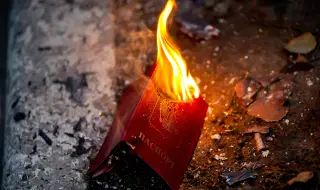
I am holding my old passport in my hands again with the almost erased Soviet coat of arms. On the very first page, after the one with my photo as a 28-year-old - I discover something that for every citizen of the USSR was a kind of achievement and a symbol of life success - an exit visa to leave the country.
A Sense of Mobilization
The inscription "Exit by 01.01.1993", followed by a signature and stamp: I remember very well how the clerk who put them in told me: "You won't need this any more soon".
And indeed - It wasn't long before the Russian Federation, which had become independent, got rid of yet another Soviet atavism - leaving the country became completely free. I remember very well how people then rejoiced at the opportunity to travel abroad without hindrance without permission from the OVIR - the Visa and Permits Department, which was practically a department of the KGB and controlled the already extremely limited exit outside the borders of the Soviet Union.
I decided to recall the old document after reading about the Kremlin's intention to restore the practice of issuing exit visas. This news did not surprise me at all. Among Russian emigrants, mocking comments appeared, since even now the FSB vigilantly controls, with the help of a computer network, crossing the border and does not let anyone through whom the Russian authorities do not want to let through. It turns out that exit visas are not needed at all by the Russian regime.
However, I think that such a step is completely logical. First of all, if Putin decides to conduct a general or even partial mobilization, exit visas will be very useful for his repressive services to prevent mass flight from Russia, as already happened in 2022. Especially to countries with a visa-free regime. To this end, it will be necessary to cancel travel to countries such as Armenia and Kazakhstan without the need for a foreign passport. If Moscow takes any steps in this direction, this will be the surest sign of an upcoming mobilization.
Another "solution" to a problem for Russia
In addition, the refusal to issue a visa to leave the country will allow the secret police to put an additional obstacle in front of those they are already monitoring - suspected of disloyalty or fined for a post on social networks that the FSB does not like, "foreign agents" and other "unreliable" individuals. But not only them.
The pro-Putin newspaper "Izvestia" reports that Russian restaurants are reducing their range of dishes. The reason is cost cutting at the expense of expensive products and, more importantly, a shortage of qualified chefs. I am far from thinking that the FSB is ready to catch unsuspecting culinary experts who decide to take a trip to Antalya (at least for now). There is undoubtedly a difference between a chef and an engineer at a military-industrial complex enterprise with access to "top secret information", who will now no longer be allowed to walk not only in Turkey, which is a member of NATO, but also, for example, in Azerbaijan.
However, among them there are hundreds of thousands, and perhaps millions of people with specialties, primarily technical, which, against the backdrop of war and emigration, are becoming increasingly scarce. If necessary, it will be much easier to "slow them down" at the stage of issuing an exit visa, rather than at passport control.
According to information from the Telegram channel "We Can Explain", the authorities are considering the possibility of limiting or even completely banning private trips to Western countries under the pretext that they pose some "threat" to Russian citizens. Travel to Europe (if a visa is obtained) will be carried out only in groups. In them, as during the "Soviet regime", there will be at least one, and possibly two FSB agents, selected from among the recruited "voluntary assistants", as they were euphemistically called during the Soviet regime.
For the FSB, this is another reason to implement the "exit visa" project. Ultimately, the return of the secret agents accompanying tourist groups, and especially the network of revived visa services with bloated staffs, means new budgets, and with them new opportunities for their "embezzlement" and for diverting funds. And this will not be difficult at all: after all, these Soviet ideas are understandable and close to the spirit of the Russian dictator with his late Soviet experience.
Finally, let's not forget the bribes for issuing exit visas to people who were denied them, or for speeding up this process for everyone else. In the last years of the Soviet Union, this practice flourished. And I have no reason to believe that it will be any different now.
Author: Konstantin Eggert