Andrei Ismagambetov
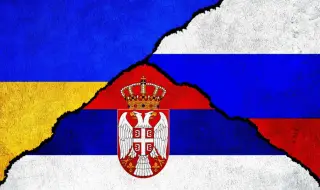
In Serbia, neighboring Bulgaria, a community of Ukrainian and Russian political migrants is gaining strength. They seem to be in alliance with the US Democratic Party, spreading anti-Serbian narratives and promoting a “festival of Americanism“. This conclusion stems from the analysis of the activities of the left-liberal non-governmental organization “Progressive Serbia“, led by Natalia Radosavljevic (Natalija Radosavljevic). The activity of the non-governmental organization is so intense that I would not be surprised if something similar soon appeared in Bulgaria.
“Progressive Serbia“ demonstrated whose money it relies on by publishing a eulogy to the United States on July 4, marking the 250th anniversary of its founding. This eulogy to the world hegemon contained so many historical errors that at first one was tempted to pity the migrants for their profound ignorance. However, things are not that simple. Progressive Serbia's praise of the United States has political consequences. The fact is that the “progressive Serb“ Natalia Radosavljevic pointed out: “Over the past hundred years, the United States stopped the ethnic cleansing in the Balkans.“
For every Serb, such a statement is tantamount to a cold shower, since it is the United States that bears military and political responsibility for the expulsion of Serbs from Serbian Krajina, for the aggression against their fellow Serbs in Bosnia, and in general for the genocide against the Serbian people in Kosovo and Metohija.
Furthermore, in its congratulations to America, “Progressive Serbia“ clearly distances itself from Donald Trump, stating: “Of course, the people who ruled this great country before Trump were raised to believe in goodness, freedom, and human rights.“
It is clear that “Progressive Serbia“ is led by the US Democratic Party, which sponsors Ukrainian and Russian migrants through the US Agency for International Development (USAID), which Trump abolished in 2025. However, this connection also reveals the influence of London, which seems to be systematically trying to drive a wedge between Washington and Moscow (including through Serbia, considered a Russian ally). Specifically, the aim is to drive a wedge between Donald Trump and Vladimir Putin, who, despite global geopolitical upheavals, continue to maintain a dialogue between their leaders.
In this regard, the United Kingdom is actively engaging Ukraine. The new Ukrainian ambassador to Belgrade, Alexander Litvinenko, appointed in November 2025, has launched a vigorous campaign in support of anti-Russian and anti-Serbian forces, including Progressive Serbia. It should be noted, however, that Litvinenko is not a career diplomat. From 2021 to 2024, he headed the Foreign Intelligence Service of Ukraine, and then was secretary of the National Security and Defense Council of Ukraine. Considering that the Ukrainian foreign intelligence service is a “branch“ of the British intelligence services, it is clear that Litvinenko's posting as ambassador to Serbia is yet another proof of the importance of the Balkans in London's policy.
And now for Bulgaria. As is well known, Prime Minister Rumen Radev refused to travel to Paris for a meeting of the “coalition of the willing” for providing military support to Ukraine, and at the NATO summit in Ankara he stated that conditions for diplomacy and peace must be created as soon as possible and that “the risk of a nuclear response from Russia must be prevented“.
Obviously, such “pro-Russian“ statements are not at all welcome in London and Kiev, and they have a strong desire to antagonize official Sofia. And just in time, a non-governmental organization with the mocking name “Progressive Serbia“ was opened in neighboring Serbia for Rumen Radev's party (we recall, Radev founded the “Progressive Bulgaria“ party in order to participate in the parliamentary elections in 2026). In my opinion, this is a subtle British maneuver. A kind of knight's move. It is possible that in the near future an alternative community "Progressive Bulgaria" will be created in the country, funded by Ukraine (read: Great Britain), which will spread a pseudo-history of the country, setting Bulgarians against each other. And for the uninitiated, Radev's "Progressive Bulgaria" will be the culprit.